
High Strength Nuts And Ordinary Nuts
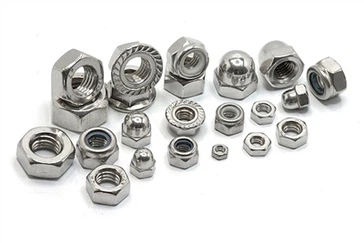
Many users do not know the difference between high-strength nuts and ordinary nuts, in fact, as long as you understand their specifications and other characteristics, it is easy to tell. The so-called high strength nut is a special bolt with high strength and high fatigue resistance used in special equipment or engineering. Of course, generally high strength nuts are used with high strength bolts to achieve the best use effect.
310S Stainless Steel
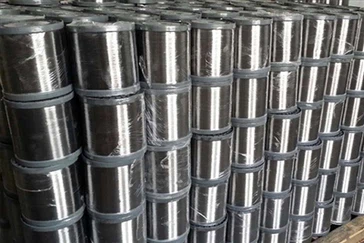
310S stainless steel is due to nickel (Ni), chromium (Cr) high content, has good oxidation resistance, corrosion resistance, acid and alkali resistance, high temperature resistance, can continue to work at high temperatures, high temperature steel pipe is dedicated to the manufacture of electric furnace tubes and other occasions, Austenitic stainless steel increased carbon content, due to its solid solution strengthening effect to improve the strength of Austenitic stainless steel chemical composition It is based on chromium and nickel to add molybdenum, tungsten, niobium and titanium and other elements, and because of its face-centered cubic structure, it has high strength and creep strength at high temperatures. High temperature above 1150°C. The melting point is 1398°C~1454°C. 800°C begins to soften, and the allowable stress continues to decrease.
The Key Of Stainless Steel Tapping
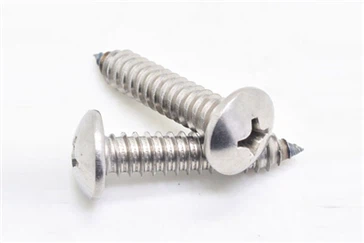
When tapping stainless steel thread, the phenomenon of “dwelling” is more serious, and the tap is easy to “bite” in the hole, so the bottom hole of the thread should be properly increased. In general, the diameter of the threaded bottom hole with a pitch of 1 mm or less is equal to the nominal diameter minus the pitch; when the pitch is greater than 1 mm, the diameter of the threaded bottom hole is equal to the nominal diameter minus 1.1 times the pitch.
Recommended Torque Table For Bolts And Nuts
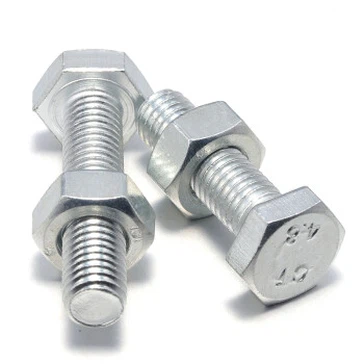
The pressure in the container or pipeline is 0-80 bar. It is recommended that the installation torque is multiplied by 90%-100% of the data in the table.
The pressure in the vessel or pipeline is 80-120Bar. It is recommended that the installation torque be multiplied by 100%-120% of the data in the table.
Frequently Asked Questions About Bolt Tensile Strength Testing
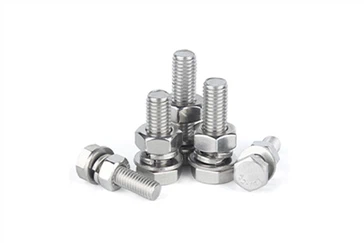
Is your bolt tensile strength tested by a first party or a third party? Has there ever been a big difference in the test results between the two sides? How to judge the correct test method? This article will test the tensile strength test method of stainless steel bolts from the perspective of GB/T3098.6 “Mechanical Properties of Fasteners Stainless Steel Bolts, Screws and Studs” (equivalent to ISO3506.1).
Thread Through Stop Gauge Unqualified Problem
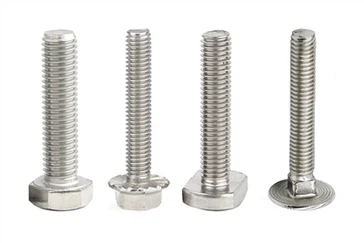
According to our handling experience, there are usually five major problems in the unqualified inspection of Tongqi regulations
Testing Method For Stainless Steel Screws
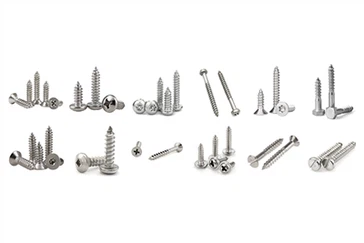
Magnetic method: magnetic method is used to accurately measure the thickness of the coating layer on the surface, which is a non-destructive and accurate measurement of the coating layer on the non-magnetic surface of the magnetic substrate with magnetic coating thickness gauge.
304 Stainless Steel CU Copper Content Problem
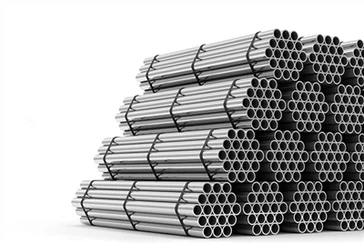
In the current GB/T1220 standard, the Cu content of 304 material is represented by “-“. There are many disputes about “-” representing “not allowed” or “not required”, which is reasonably understood as “not required”.
What Is a Fastener
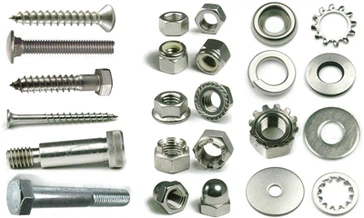
What Is a Fastener?
The term”fastener”is an encompassing term that describes a broad range of tools. These tools include screws, bolts, nuts, etc., and they share a common aim. The aim is to enable the mechanical adherence of objects. In simple terms, fasteners help to hold objects in place or together mechanically.
You may argue that glue can perform this function effectively. If the glue is not an example of fasteners, then what is a fastener? This will prompt us to expand on the initial definition. Hardware fasteners are those that help to hold objects together mechanically.
There is a broad classification of fasteners. It classifies them into Permanent and Non-Permanent fasteners. Generally, fasteners are considered to form non-permanent joints. That is, you should be able to separate two components connected with a fastener. While the pieces come apart, they must not suffer any form of damage. An exception to this rule is the rivet, which is a permanent fastener.
The fact that most fasteners form non-permanent joints does not mean that the joint is weak. Using the fasteners with properly formed threads will give you a reliable hold on your objects. That way, you can be sure that your object can be subject to a high level of stress. They are highly versatile, making them useful for various types of joints.
Things To Be Aware Of When Applying Expansion Screws
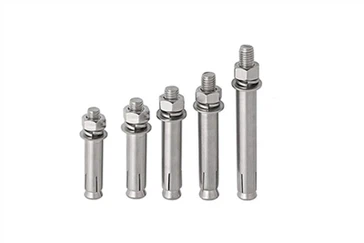
We need to pay attention to the following things when making expansion screws:
1, the depth of the hole: the relevant information is the length of the expansion tube, but I found that this depth is not enough in the specific construction, may be related to the amount of debris residue in the hole, so you better be about 5 mm deeper than the length of the expansion tube. As long as you are greater than or equal to the length of the expansion tube, then the length of the expansion bolt left underground is equal to or less than the length of the expansion tube.