
MYWAY Studs – Wide Range, Great Value. Your China Fastener Manufacturer.
11+ Years Expertise | Professional Fastener Manufacturer | Standard & Custom Parts | DIN, ISO, ANSI Certified | Strong R&D | Ample Stock | Cost-Effective |
Professional Team | Serving 40+ Countries | Reliable Logistics
Double End Stud
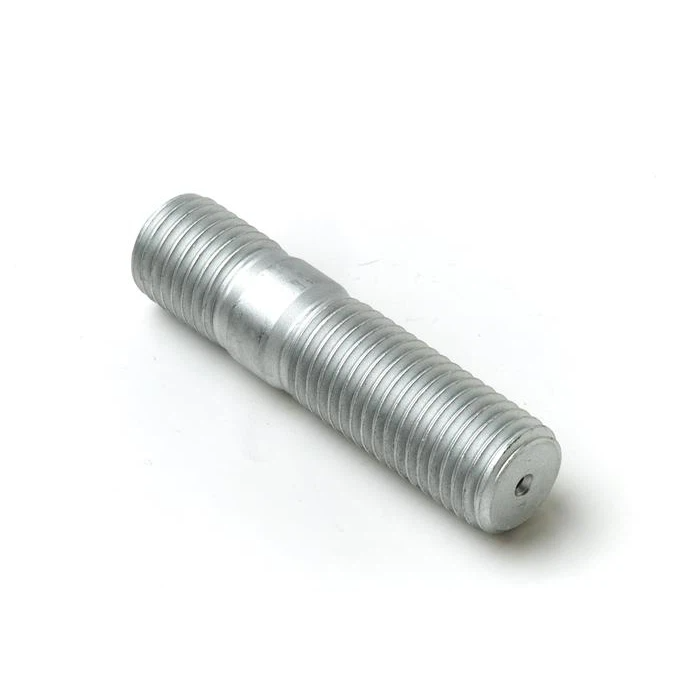
Thick Stud Bolt DIN940
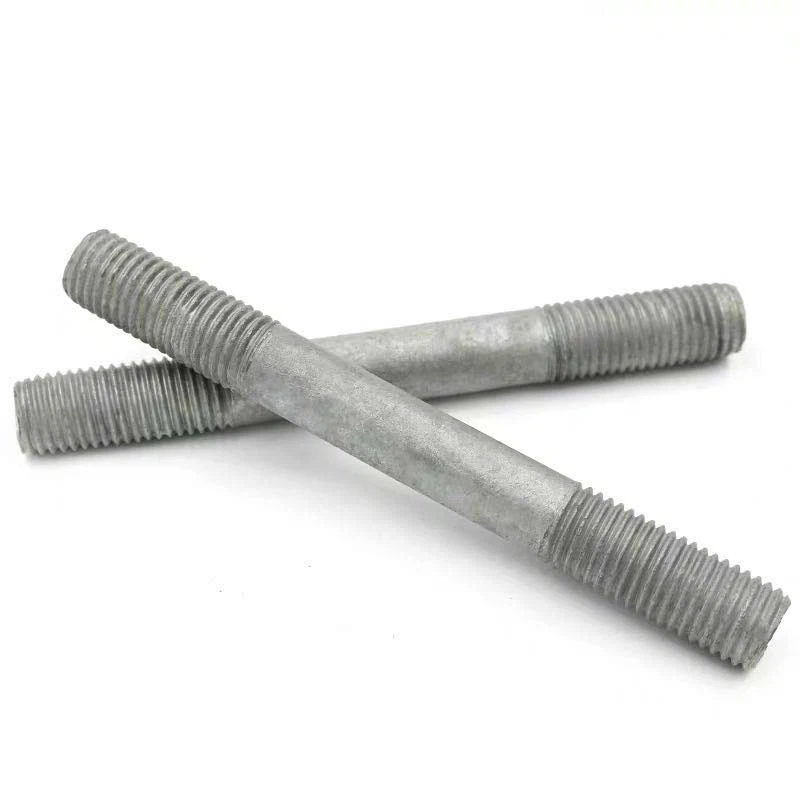
Stud Bolt DIN938 Dacromet
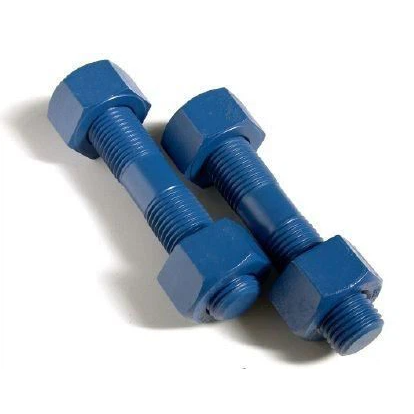
Stud Bolt DIN938 Teflon/PTFE
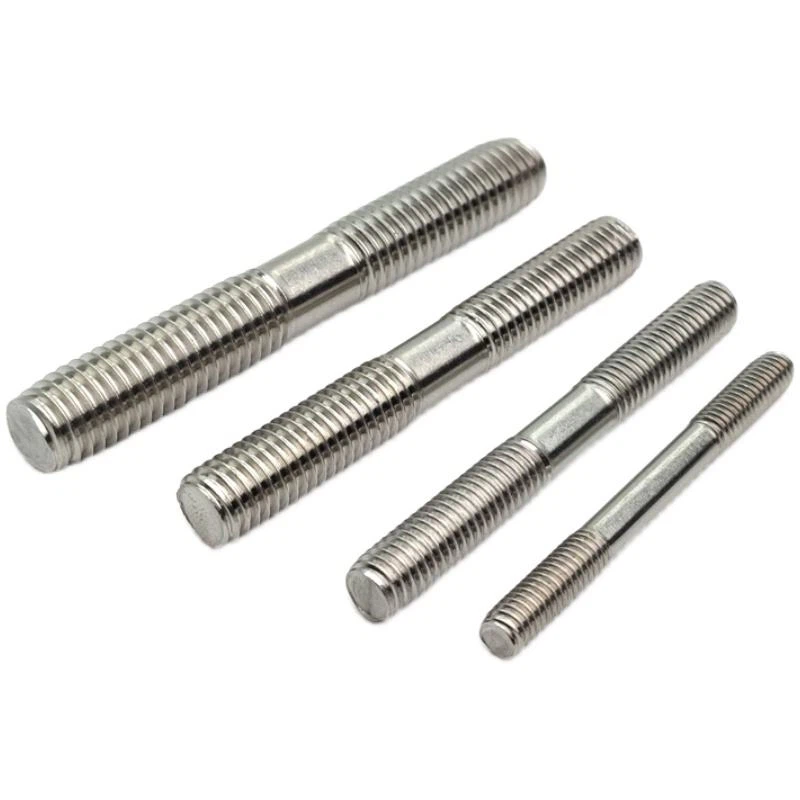
Stud Bolt DIN938 SS304 316/304 316stainless Steel
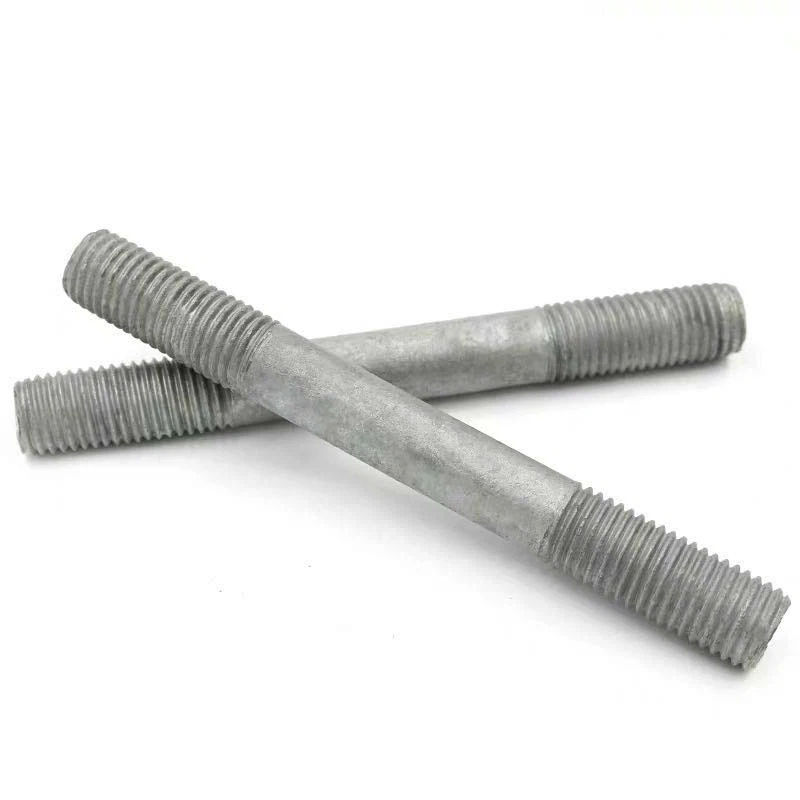
Stud Bolt DIN938 HDG/Hot Dip Galvanized
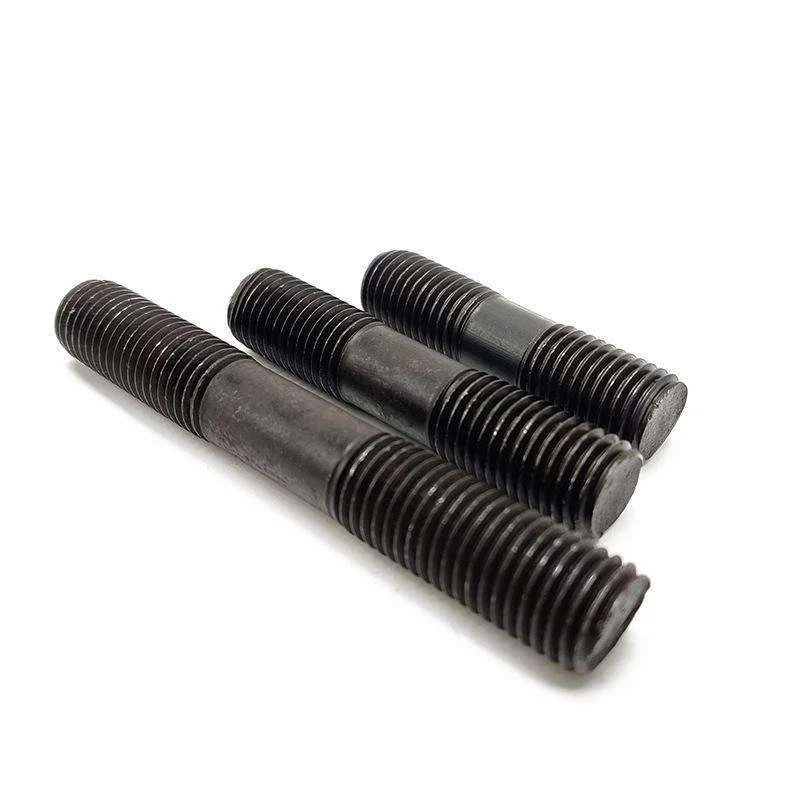
Stud Bolt DIN938 Black
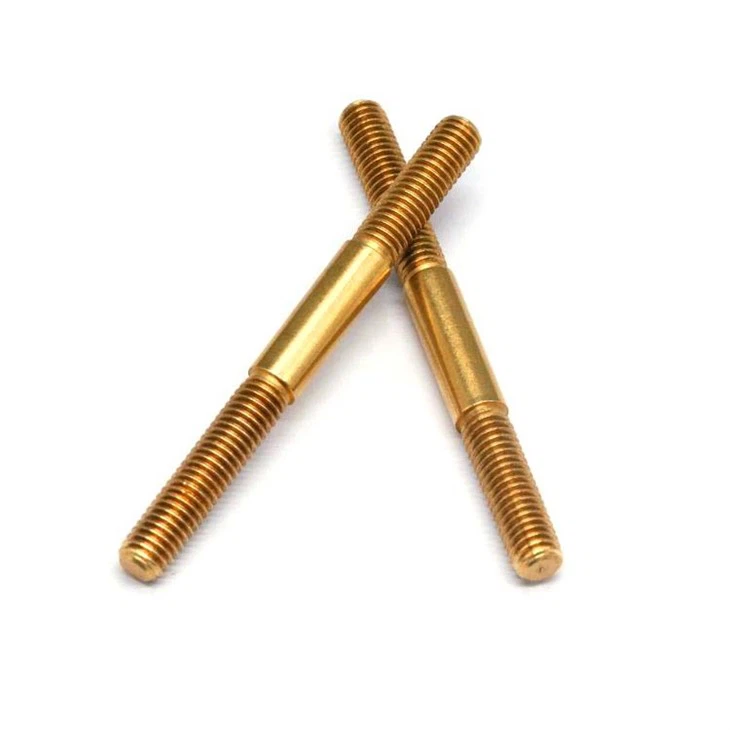
Stud Bolt DIN938 Brass
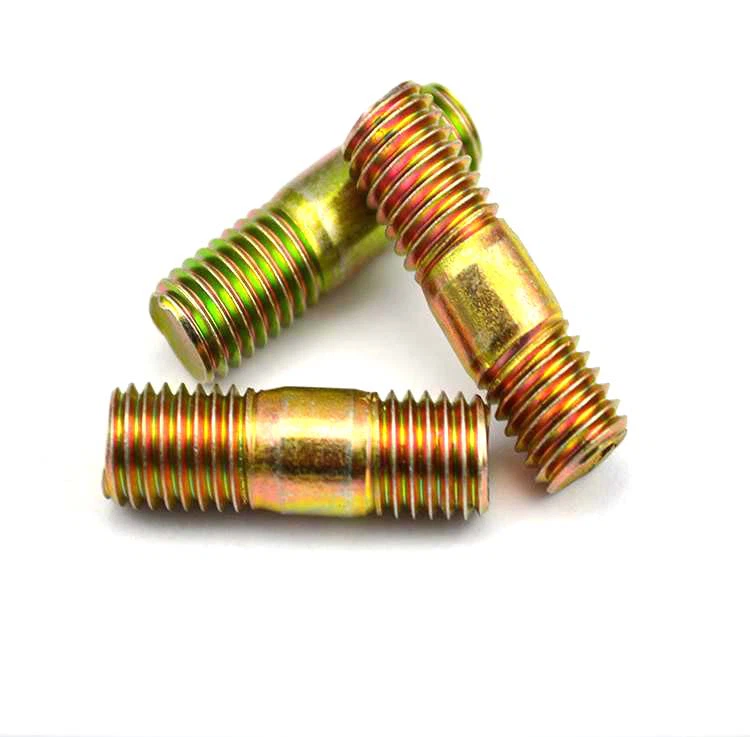
Stud Bolt DIN938 Yellow Zinc
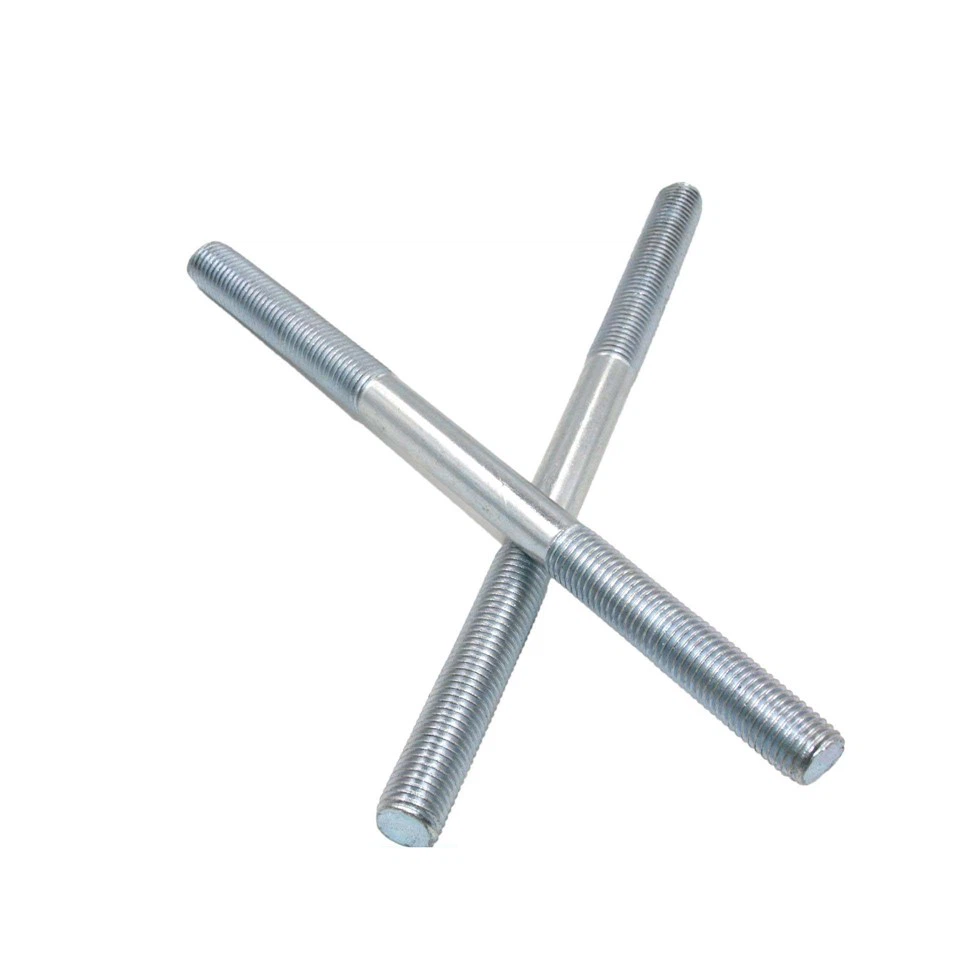
Stud Bolt DIN938 Bright Zinc/Zinc Plated/Clear Zinc/Blue White Zinc
Stud bolts are an essential component in various industrial and construction applications. They are commonly used in a variety of industries such as oil and gas, construction, transportation, and power generation. These bolts are used to connect two heavy machines or parts together. A stud bolt is a threaded rod with two heavy hexagonal nuts on each end. The rod has threading on both ends which allows it to be screwed into a threaded hole on one end.
How do they Work?
Stud bolts work by providing a consistent and precise amount of tension in the joint between two attached objects. They are tightened on both ends to apply a uniform amount of pressure, helping to prevent leaks, separation, and loosening of connections.
Different Types of Stud Bolts
Stud bolts come in different grades and materials. The most commonly used materials are carbon steel, stainless steel, and alloy steel. These studs are designed in various thread shapes including fully threaded, partially threaded, double-end studs, and weld studs. Apart from these, some stud bolts may also feature coatings to resist corrosion and add extra strength to the joints.
Applications of Stud Bolts
Stud bolts are commonly used in pressure vessels, pipelines, valves, and flanged joints in structural applications. They are crucial for a range of industries, including oil and gas, petrochemicals, power plants, construction, and aerospace.
Final Thoughts
Stud bolts are a crucial component for any industrial application that requires high-pressure and high-temperature performance. With their precise tensioning capabilities, they help to ensure a perfect fit and stable connection in crucial areas. Whether you are involved in construction projects, pipeline production, or any other industrial application, it is essential to understand the importance of stud bolts and t how to use them effectively.
What is Double End Stud
Stud bolts are commonly used to hold two or more parts together. They are threaded rods that can be inserted into threaded holes. Unlike regular bolts, though, stud bolts don’t have a head. They consist entirely of a shank. While there are different types of stud bolts, double-end stud bolts are one of the most popular. A double-end stud bolt is a type of fastener with exterior threading of equal lengths on both ends. The exterior threading doesn’t completely cover the shank. Instead, there’s a gap in the middle where the shank is smooth and unthreaded.
Advantages of Double End Stud
Versatility: One of the key advantages of double end bolts is their versatility. They can be used for various applications because of their unique design. Whether you are fastening wood, metal, or concrete, double end bolts can provide a strong and reliable connection.
Easy Installation: Another advantage of double end bolts is that they are easy to install. Because they have threads at both ends, they can be screwed in from either side, making them ideal for applications where access is limited.
Cost-Effective: Double end bolts can also be cost-effective. Because they are versatile and easy to install, they can save time and money in the long run. They are also reusable, which means you can use them repeatedly.
Available in multiple sizes: Double-end bolts come in numerous sizes starting from 0.25 – to 4 diameters. The length depends on the intended use of the fastener.
Durable: These fasteners are intended for high-strength bolting and can withstand any force from external sources while keeping the joints in place. Also, they are manufactured using high-quality materials and offer different strengths.
Rust and corrosion-resistant: Double-ended bolts are made with materials like stainless steel that resist corrosion.
Double-end bolts will allow you to join flanges or pipes more effectively.
Why Choose US
Our Factory
Zhejiang Myway Co.,Ltd started in 2005, Main producing fastener products. With the continuous development of business, the company invested in tool products. Established Zhejiang Myway Co., Ltd in 2015 with a registered capital of 50 million R M B.
Our Product
The company is located in Jiaxing, Zhejiang. At present, it has 3 factories and hundreds of cooperative factories, so that our products can meet the needs of different customers. The current products cover fasteners, hand tools, power tools, hydraulic tools, pump valves and other auto parts and mechanical products. The products have involved steel, machine tools, textiles, chemicals, mining, electric power, machinery manufacturing and other industries.
Professional Team
The company has a professional sales team of nearly 50 people, providing customers with high-quality and comprehensive services before, during and after sales, and can provide standardized products and customized solutions at the same time.
Our Service
In order to provide customers with worry-free service, we listen to customers’ ideas wholeheartedly, and provide customers with a full range of services from product development, quality control, order follow-up and after-sales service.
Full threaded stud bolt
These stud bolts feature threads on both ends, allowing them to be used with either nuts or tapped holes. The full thread provides maximum contact between the bolt and tapped hole, reducing stress concentrations and increasing strength.
Tap end stud bolts
When working on a project that requires fastening two objects together, it’s important to use high-quality bolts that can withstand even the toughest conditions. That’s where tap end stud bolts come in. These unique bolts are designed to have threads on both ends, making them incredibly versatile and perfect for a variety of applications.
Partially threaded stud bolt
These stud bolts have one end that is unthreaded and another that is fully threaded. This design allows for greater control over the length of each bolt since manufacturers can determine how long each bolt will be by cutting off any unnecessary threading on either end, depending on the application requirements.
Continuous threaded stud bolts
Continuous threaded stud bolts are a critical component of many industrial applications. These bolts are designed to provide a secure, reliable connection between two parts and are commonly used in heavy machinery, construction equipment, and other areas where strength and durability are critical. With their continuous thread design, these bolts can be used in a wide range of applications, from simple construction projects to complex industrial settings where precision is key.
Double ended stud
These studs feature two heads at opposite ends instead of one head, and one nut like most traditional studs do. The double-ended design eliminates the need for additional nuts during assembly, which makes them easier to install than traditional single-ended studs while also providing a stronger connection between two pieces of hardware due to their increased contact area.
What to Consider When Choosing a Double-End Bolt
When looking for a double-ended bolt, you’ll need to consider various factors. Here are some essential considerations.
Material
The suitable materials for your double-end bolt will depend on how and where the fastener will be used. Your choice will affect your fastener’s strength, brittleness, corrosion resistance and cost.
Some materials to consider include;
Steel: It has high tensile strength and durability and is a common material for double-ended bolts. You can choose from stainless steel, alloy steel, and carbon steel.
Bronze: This material is suitable for high corrosive environments and is more expensive than steel.
Brass: Softer than bronze and steel and delivers corrosion-resistant benefits.
Aluminum: It’s light and shares characteristics with brass.
Coating
Coatings are used to add or increase corrosion resistance on double-ended bolts. They can also add some decorative characteristics to fasteners. When looking for double-ended bolts, consider the type of coating applied. For instance, zinc plating will increase the corrosion resistance of your double-ended bolt, although it may compromise and rust if that layer is damaged.
Galvanizing coats are thick and offer increased corrosion resistance in most environments. Likewise, chrome plating creates a corrosion-resistant coat while adding an aesthetic feature to your fastener.
Double End Stud Bolt Specifications
Forming | Forming Hot & Cold Forged |
Metric Size | M0.6 to M100 |
Imperial Size | #0 to 4″ |
Threads | UNC, UNF, ISO, BSW & ACME |
Standards | DIN, ASME, ISO & IS |
Variants | Double End Stud Bolts, Metric Double End Stud Bolts, Imperial Double End Stud Bolts, Coarse Pitch Double End Stud Bolts, Fine Pitch Double End Stud Bolts with Reduced Shank |
Dimension Standards | ASME B18.31.1M ASME B18.31.2 DIN 835 DIN 2509 DIN 2510 L DIN 2510 Z DIN 2510 K DIN 2510 ZU DIN 2510 KU DIN 2510 GP DIN 2510 GQ DIN 2510 GR DIN 2510 GS DIN 2510 HP BS 4439 PN 82137 CSN 21178 PN 82125 UNI 5911 CSN 21174 PN 82131 CSN 21176 |
Thread Types | Unified National Fixed Unified National Coarse Unified National Fine Unified National Extra Fine ISO Metric British Standard Fine British Standard Whitworth ACME |
Thread Standard | Please click for list of thread standards. |
Alloy Categories | Alloy Steel Carbon Steel Stainless Steel Hastelloy Inconel Incoloy Nickel Duplex Steel Super Duplex Titanium Monel Brass Aluminum Bronze Phosphor Bronze Silicon Bronze Tantalum Zirconium |
ASTM Specifications | ASTM A36 ASTM A105 ASTM A182 ASTM A193 ASTM A307 ASTM A320 ASTM A350 ASTM A325 ASTM A354 ASTM A449 ASTM A453 ASTM A490 ASTM A540 ASTM A638 ASTM A694 ASTM B160 ASTM B164 ASTM B564 ASTM B574 ASTM A1014 ASTM A1082 ASTM F468 ASTM F593 ASTM F2281 ASTM F3125 BS EN ISO 3506-1 ISO 898-1 SAE J429 SAE J995 |
Coatings | PTFE (Teflon) Hot Dip Galvanizing Aluminum Zinc Flake Zinc Phosphating Manganese Phosphating Metallic Zinc Nickel Plating Chrome Plating Cadmium Plating Silver Plating Tin Plating |
Materials Used for Stud Bolts
Stud bolts come in a variety of materials, with each material chosen due to its particular properties and fitness for specific environmental and mechanical stresses. The reason the material makes such a difference is because this will directly affect how strong the bolt is, how good it will be against corrosion, and how long the bolt will last.
Carbon steel
Material: Stud bolts are usually manufactured by carbon steel which is the most common material regarding high strength as well as cost-effectiveness. It is usually utilized in the regular tasks where no corrosion elements or to very high temperatures. This kind of grade is used in industrial and moderate condition because of its strength at moderate temperatures giving approximately 125,000 psi tensile and commonly known as astm a193 grade b7.
Stainless steel
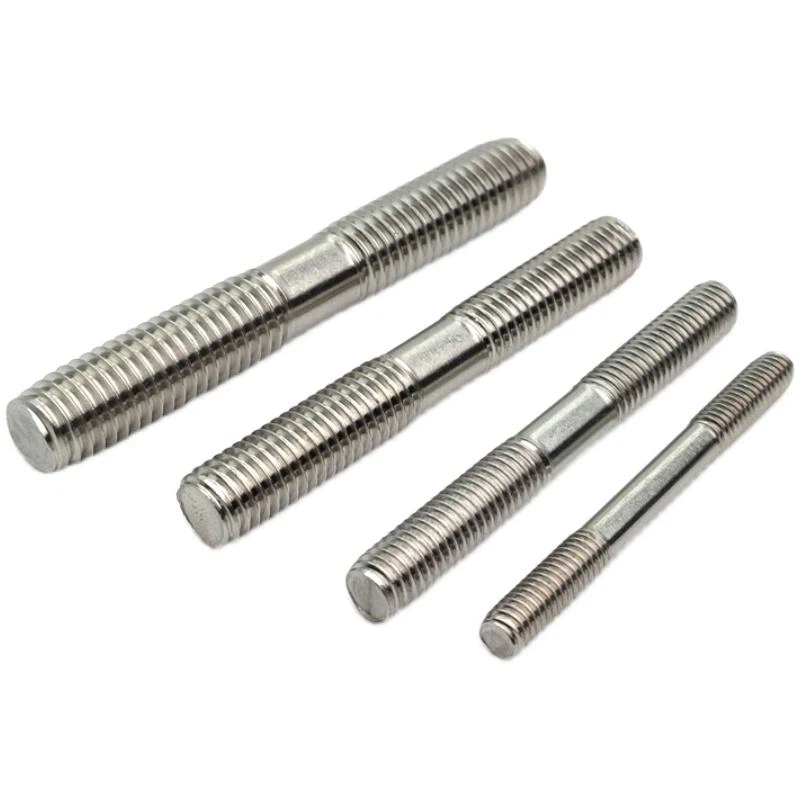
In the case of corrosive environments, stainless is by far the most obvious choice due to its natural corrosion resistance properties. Common grades include 304 and 316 stainless steel, with the latter more desirable in very corrosive marine or chemical environments due to increased corrosion protection provided by its higher molybdenum content. In the above application, stainless steel stud bolts are required due to the harsh chemicals that are often used in chemical processing equipment.
Alloy steel
Where greater high-temperature needs exist such as for alloy stud bolts. Grades of astm a193 grade b16 are used for high temperature or high pressure applications like boiler and pressure vessels. Depending on the grade and heat treatment, bolts can have tensile strengths that exceed 125,000 psi and are capable of withstanding temperatures up to 450°c.
Exotic alloys
In extreme conditions, such as corrosive saltwater environments or highly acidic and alkaline exposure, we use exotic alloys like hastelloy, inconel, monel and titanium. These offer incredible power and resistance to corrosion and heat bye extension. For example, inconel 625 is strong at cryogenic to 980°c which makes it well suited for applications in the aerospace industry for components.
Coatings and platings
Aside from the foundation materials, stud bolts are frequently provided with surface treatment that permit them higher corrosion resistance or lower friction. Carbon steel bolts are typically zinc plated to prevent them from rusting, and in the case of bolts used in marine applications they would have excellent corrosion resistance properties by being cadmium plated. In the case of applications needing non-stick properties or lower friction, ptfe (teflon) coating is applied that will also bring a layer of corrosion resistance.
Common Applications of Stud Bolts
In these picrances and oil industries
Stud bolts find wide applications in the petrochemical and oil industries since these must be used to secure flanges and other joints that need to support high pressures, such as connections made with corrosive materials. Astm a193 b7 stud bolts are integral to use in these industries due to their ability to withstand the high temperature and pressure environments common within oil refineries, chemical plants, etc. For instance, they play a significant role in connecting the pipes that convey fluids and gases through hostile environments; tightness of the connection is maintained to avert leaks that could be detrimental.
Power generation
In power generation, more particularly in the nuclear and coal-fired power plants also enables using graded stud bolts. These are employed in the manufacturing of high pressure boilers, turbines and various other type of high pressure vessels. The use of stud bolts poses a critical task in this regard as they are responsible for keeping the systems that generate power running smoothly, preventing any outages and guaranteeing them to perform continuously. The bolts for these applications are often manufactured from high strength materials for use in power plants which can handle thermal and mechanical heat.
Stud bolts are used in the construction and infrastructure industry for building high-rises, bridges, and tunnels. They are highly sought after due to their strong grip on large structural elements. Steel beams, girders and other main parts of a structure are fastened with the help of stud bolts to create structural assemblies to be able to support large weights or resist environmental movements such as wind or seismic activity.
Automotive and aerospace
Stud bolts are used in the automotive and aerospace industries due to their accuracy and the high level of strength with which they hold essential parts together. For use in automobiles, stud bolts are utilized in greasy engine and transmission assemblies which help the parts to be tightened up tightly against the operational vibrations and stresses. In the aerospace industry, stud bolts are used to secure components in aircraft engines and airframes, which may suffer catastrophic consequences if they fail. Ten years ago most rockets were launched with space age materials like titanium, aircraft grade aluminum or exceptional light and strong composites, so that walls between the tanks are not only thin (3.8 mm giving 400 litres of full capacity) misalignments up to 180 microns do not matter since external pressure is small.
Marine applications
In marine applications, especially due to exposure the saltwater environment, both strength and corrosion resistance is crucial for stud bolts. Boat engines, hull components and naval infrastructure are all put together using coated stud bolts or stainless steel. Mechanol chemical anchor nuts and bolts live up to the demands of marine environments, enduring harsh seawater and aquatic atmospheres that can quickly degrade lesser materials ensuring a long-lasting, efficient operation of marine devices.
Manufacturing equipment
The stud bolts are used to assemble the heavy machinery and equipment in manufacturing. They lock key elements within the machines that do intense operations such pressings, cuttings, and assemblings. Stud bolts can be easily fixed and removed, which makes maintenance practices and adjustment operations more agile leading to faster turnaround times with minimum manufacturing downtime.
About Screws Packaging And Transportation
Heat safely
Use extreme caution if you need to use a heat source to loosen a stud. Keep the flame away from flammable things and be cautious of hot metal and surfaces. If necessary, use a heat-resistant barrier to protect nearby components.
Tapping gently
If, despite your attempts, the stud remains caught, gently tapping it with a hammer may help break the binding between the threads. During this process, take care not to harm the threads.
Clean and inspect threads
After successfully removing the component, inspect both the stud and the threads. If you intend to reuse the stud, clean and restore the threads to their original condition with a thread chaser or die.
Dispose of or store safely
If the stud is damaged or no longer required, properly dispose of it. If you intend to reuse it, store it in a clean and dry location to prevent corrosion.
What Are the Precautions During the Process of Removing a Stud
Removing a stud can be a difficult task, especially if the stud is rusty, resistant, or huge. To safeguard your safety and avoid mishaps, specific precautions must be taken during the process.
Personal protective equipment (ppe)
Always wear the appropriate ppe, including safety glasses or goggles to protect your eyes from debris, gloves to shield your hands, and, if needed, ear protection if using loud tools.
Work area preparation
Make sure your workspace is clean, well-lit, and clear of debris or obstructions that could obstruct your mobility. If you intend to use a heat source, make sure there are no combustible things around.
Leverage
To offer additional leverage on difficult studs, use an adequately sized breaker bar or a pipe as an extension. However, exercise caution to avoid overexertion, as this can lead to muscle strains or tool failures.
FAQ
Q: Can these double-end threaded studs be used on wood?
A: Yes, wood screw-threaded studs or hanger bolts are used to hang / mount / attach parts to wooden structures. Wood-to-wood joining studs, also called dowel screws, are suitable for joining two wooden pieces.
Q: Can we reuse double-end threaded rods once removed?
A: Yes, double-end threaded studs have durable threads on their ends for installation & removal multiple times.
Q: What standards do double-end threaded rods abide by?
A: These double-end threaded rods adhere to international standards like din (german institute for standardisation) and astm (american society for testing and materials) for meeting material quality standards and dimensional requirements.
Q: How do a fully threaded double end threaded stud and a partially threaded one differ from each other?
A: A fully threaded double end threaded stud has threads along its entire length, while a partially threaded one has threads only on the ends.
Q: How to determine the length of a double end threaded stud?
A: The length of a double end threaded stud is determined by measuring the distance between two objects being connected and adding enough length to allow for the installation of nuts on both ends.
Q: What is a double threaded bolt used for?
A: Double-ended bolts are threaded fasteners with equal thread length at both ends. They are commonly used for high-strength bolting cases. Double-ended bolts can be customized based on your requirements.
Q: What is a double-sided bolt called?
A: Also known as dowel screws, double-ended screws are threaded fasteners that are used to create a hidden joint.
Q: How to use a double-ended bolt?
A: Since the double ended screws are typically for attaching two wood surfaces together, start the screw in one of the pilot holes (just enough to stay put). Then align the other pilot hole and spin one or both pieces of wood together.
Q: What do you call a bolt with threads on both ends?
A: Double end stud bolts have equal lengths of thread on both ends of the bolt shaft. They are commonly used in sealing flanges.
Q: What is double bolt?
A: Double bolt clamps are rugged, plated iron two-bolt clamp with machine bolts and hex nuts. In high-heat, abrasive materials conveyance, and chemical fume environments, these clamps are used to secure the hose and to provide safe working environment.
Q: Can you get double-ended screws?
A: Double threads may provide a more robust fastening. Toolstation stocks a wide range of twin thread and double-ended screws from leading brands. Our selection includes multi-packs of 100 to 200 twin thread countersunk Pozi screws.
Q: Is a stud bolt threaded on both ends?
A: Double-end stud bolts have a partially threaded shank. They are known as “double-end stud bolts” because they feature threading on both ends of the shank. The middle of a double-end stud bolt is smooth and unthreaded. Fully threaded stud bolts, as you may have guessed, have a fully threaded shank.
Q: What is a double nut for bolt?
A: The double nut, also known as jam nut, is a friction locking method that uses two separate nuts on top of each other. Care must be taken during the tightening of the second nut as overtightening will lead to thread stripping or tensile rupture of the bolt.
Q: What is the difference between a stud bolt and a hex bolt?
A: In Petrochemical industry stud bolts and hex machine bolts are used for connections. The Stud Bolt is a thread on full-lengths or at both ends, while Hex Machine Bolt has a hexagonal head with one nut. Both the nuts and head are six-sided.
Q: What type of bolt commonly used in construction that is threaded in both ends?
A: U-Bolt. A “U”-shaped curved bolt having threaded holes on both ends is known as a “U bolt.” In addition to being employed in a variety of building and construction applications, these fasteners are used to support piping.
Q: What is single vs double bolt?
A: Generally, single-cylinder deadbolts are less secure than double-cylinder options. They could potentially allow easier access to the home from intruders in the know. Furthermore, they’re easy for small children to use, which means they could get outside without anyone being aware.
Q: What is a double ended bolt called?
A: Stud. A double ended bolt or piece of threaded rod. Often used in machine and automotive applications. Studs may have different threads on each end.
Q: What are the advantages of studs?
A: Some advantages of studs over bolts are: During fastening studs provides less wear to the block’s threads. This leads to the long life of threaded holes in the block. The studs do not twist during their tightening, so they have greater ability to provide accurate torque than bolts.
Q: Are longer studs better?
A: Longer studs help to provide increased grip on softer surfaces, whilst on firmer surfaces a shorter stud can help with your speed and changes in direction. Equally, the inflexibility of a metal stud will provide extra grip, whilst the minor flexibility of a rubber stud will again improve speed and changes in direction.
Q: What is the maximum length between studs?
A: Stud spacing is normally 16 inches in exterior walls, although 24-inch spacing of 2×4 studs is acceptable in one-story buildings if wall sheathing or siding is of adequate thickness to bridge across studs.
We’re professional bolt manufacturers and suppliers in China, specialized in providing high quality customized products with low price. We warmly welcome you to wholesale or buy discount bolt in stock here from our factory. Contact us for free sample.