
MYWAY Metal Washers – Wide Range, Great Value. Your China Fastener Manufacturer.
11+ Years Expertise | Professional Fastener Manufacturer | Standard & Custom Parts | DIN, ISO, ANSI Certified | Strong R&D | Ample Stock | Cost-Effective |
Professional Team | Serving 40+ Countries | Reliable Logistics
Lock Washers
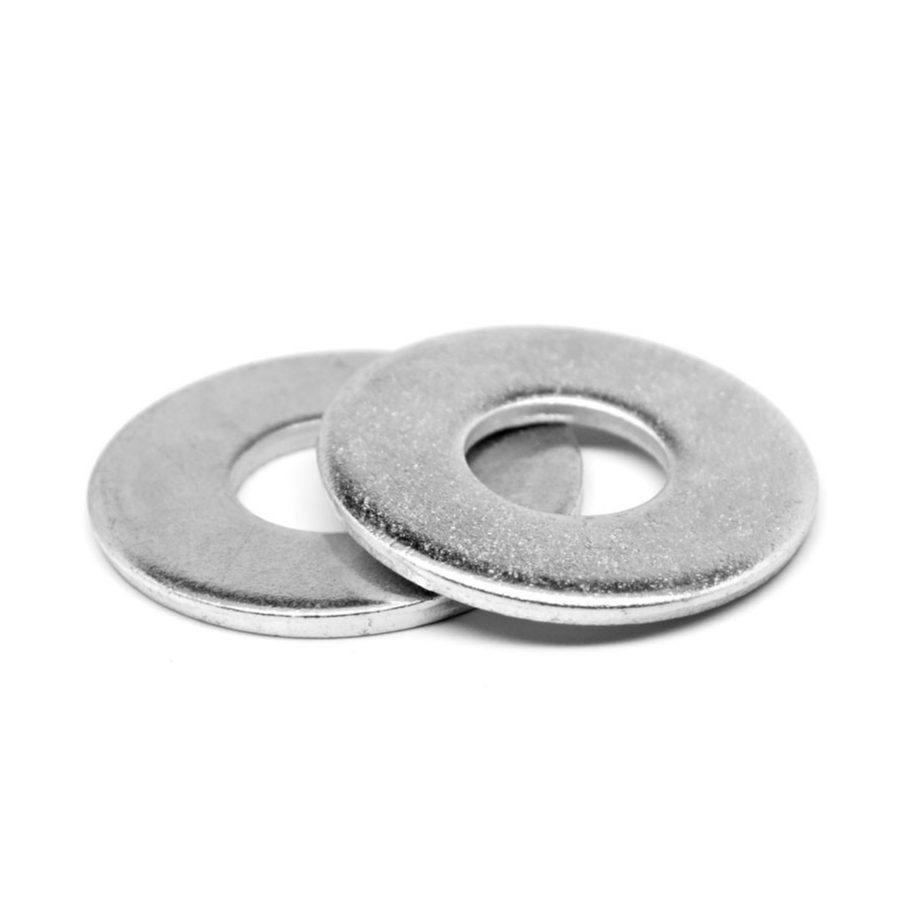
Flat Washers
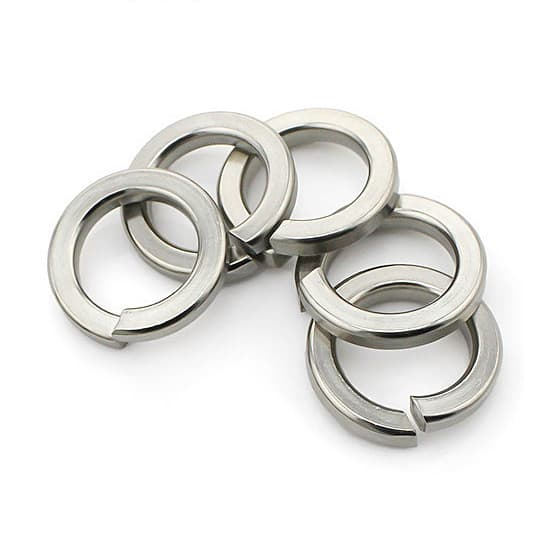
Spring Washers
A lock washer is a washer used to prevent loosening of fittings and to prevent rotation of screws. lt can be used with locking nuts, locking nuts, and threaded locking fluid to prevent vibration from loosening bolt connections
Standards provided: DIN,BS,ANSI/ASME/ASTM/,ISO,EN,GOST etc.
Diameter range: M1.7-M31
Grades:4, 5,6,8, 9, 10.etc
Raw Materials : Carbon steel, stainless steel, alloy steel, brass,nonferrous metals, etc
What is Lock Washers
A locking washer is a type of washer that’s designed specifically to prevent the bolt with which it’s used from loosening. Like other washers, they’ll distribute the load of the fastened object or objects more evenly. Locking washers go one step further, though, by “locking” the bolts in place. Bolts can loosen over time. If installed in a machine or piece of equipment, a bolt may gradually loosen. Eventually, the bolt may work its way out of the threading hole where it was originally installed. Locking washers prevent this from happening by securing the bolt in place. Even if the machine or equipment produces heavy vibrations, the bolt shouldn’t loosen if it’s secured with a locking washer.
Advantages of Lock Washers
Improved strength
Lock nuts create stronger connections that may not occur when relying solely on thread-locking compounds. With their nylon inserts tightly gripping onto bolts, screws have extra holding power which reduces chances of loosening caused by vibrations or other movement force applied to assembly components. In certain industries where safety is crucial such as automotive or aerospace engineering experts recommend using a combination of locking computes plus lock washers for optimal protection against movement failure issues.
Increases durability
Locking washers distribute the load evenly over a larger area, reducing the stress on the fastener and increasing its durability. They also help prevent damage to the surface that the fastener is attached to.Locking washers are simple and easy to install. They don’t require any special tools or skills, making them a cost-effective and convenient solution for securing fasteners.
Reduced wear & tear
The threads of mating parts typically experience high wear rates over time due to friction created during usage cycles. But thanks to the additional energy absorption provided by the rubber cushioning effect of lock washers this problem can be largely avoided and mechanical assemblies tend to last longer before repair/replacement needs arise again and again.
Corrosion protection
This is perhaps one of the most important reasons why more manufacturers opt for robust metal washer designs such as those found on locknuts today versus plastic models found in decades past; metal designs offer improved corrosion protection since water cannot enter the joint easily like it can with plastic designs that lack proper drainage channels. Over time rust ingress can significantly degrade performance while also increasing maintenance costs so preventing further water ingress quickly becomes one important priority in most manufacturing settings.
Why Choose US
Our Factory
Zhejiang Myway Co.,Ltd started in 2005, Main producing fastener products. With the continuous development of business, the company invested in tool products. Established Zhejiang Myway Co., Ltd in 2015 with a registered capital of 50 million R M B.
Our Product
The company is located in Jiaxing, Zhejiang. At present, it has 3 factories and hundreds of cooperative factories, so that our products can meet the needs of different customers. The current products cover fasteners, hand tools, power tools, hydraulic tools, pump valves and other auto parts and mechanical products. The products have involved steel, machine tools, textiles, chemicals, mining, electric power, machinery manufacturing and other industries.
Professional Team
The company has a professional sales team of nearly 50 people, providing customers with high-quality and comprehensive services before, during and after sales, and can provide standardized products and customized solutions at the same time.
Our Service
In order to provide customers with worry-free service, we listen to customers’ ideas wholeheartedly, and provide customers with a full range of services from product development, quality control, order follow-up and after-sales service.
Types of Locking Washer
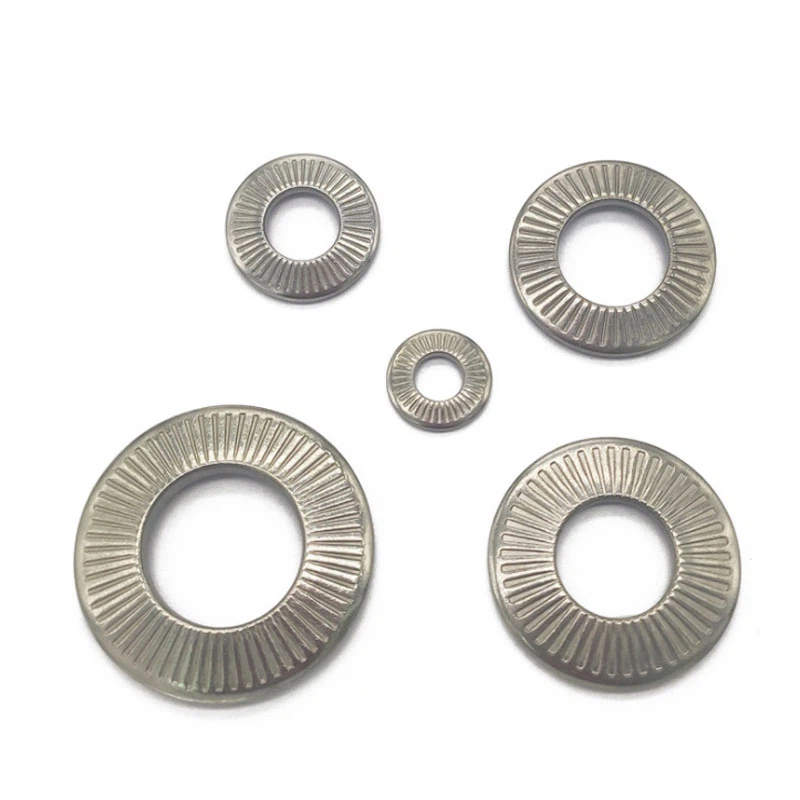
Serrated washers work by gripping into a surface with their teeth. The teeth make serrations or scratches in the material, and the friction created helps to prevent a bolt from loosening.You can get internal serrated washers, external serrated washers, and serrated washers that are both internally and externally serrated. Internal serrated washers have the advantage of enabling a cleaner finish, as the serrations are hidden better.
Spring washers use spring action to press against a bolt to prevent it from loosening. The spring action only comes into effect when a bolt starts to become loose. When a bolt is tight against a spring washer and the spring washer is flat, the spring does not exert any force. However, when the bolt starts to loosen, the spring exerts force on the bolt which helps prevent it from rotating.Split washers are a common type of spring washer. Conical washers achieve a similar spring effect by pushing against a bolt.
Schnorr safety washers use both serrated teeth and spring action. While their serrated teeth create friction, their conical shape produces a spring action when tightened against a bolt.
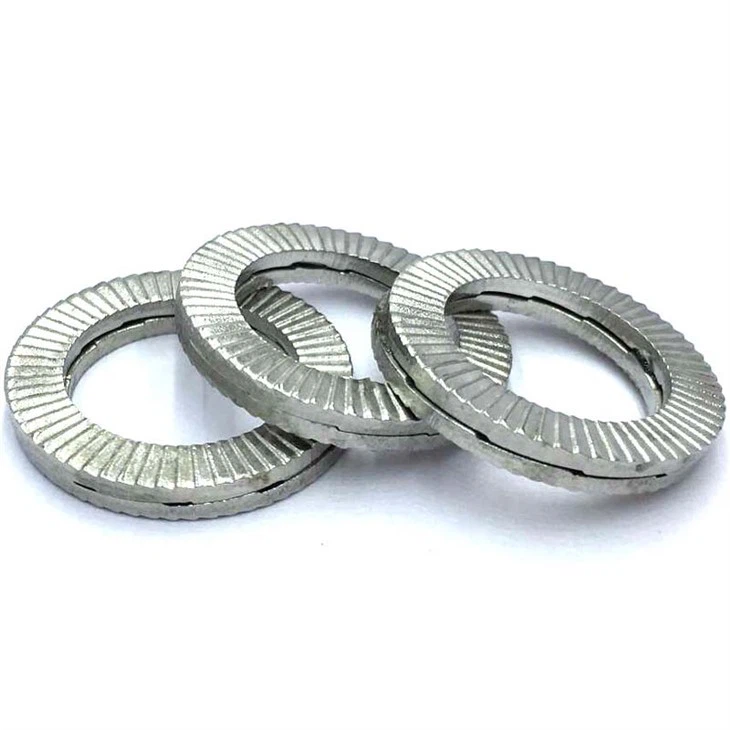
Nord-Lock washers use an innovative method to resist vibrations, which does not rely on friction or spring action. Nord-Lock washers use a pair of interlocking washers, which exert increasing force on the underside of a bolt as back-out occurs. Because Nord-Lock washers use tension rather than friction, they are capable of stopping loosening completely.
How Locking Washers Work
Locking washers work by exerting downward tension. When inspecting a locking washer, you may notice that it doesn’t have a complete circular shape. While most traditional washers are circular, locking washers have a slightly different shape. They consist of a semi-raised piece of circular metal. In other words, locking washers feature a coiled design, which is responsible for their locking action.
With their coiled design, locking washers work in a similar way as a spring. Springs, of course, exert tension when exposed to pressure. Locking washers share this characteristic trait by exerting tension as well. When you twist a nut onto a bolt, it will press against the locking washer. The locking washer will then generate tension that secures the bolt in place.
How Lock Washers Keep Items Tight
A lock nut washer is a type of fastener used to secure two or more pieces of material together. The unique aspect of a lock nut washer is that it creates a stronger bond than typical nuts, bolts, and screws because the lock nut washer applies pressure throughout the connection instead of just at points like traditional fasteners. Thus, when it is used properly, the lock nut washer ensures that the tightened connection holds and does not come loose over time due to environmental effects such as vibration or wear.
The first step in using a lock nut washer properly is to select an appropriate size for the job. Once you have determined which size to use, it’s time to begin assembly. Start by placing your two pieces of metal in position and threading one side onto the other using a standard wrench or tools specific for installing these types of fasteners. Be sure to line up any mounting holes and pay attention to any directional markers on either piece some require exact positioning.
Next you will need dry lubrication such as graphite powder or powdered molybdenum disulfide applied around both sides where they meet roughly 1/8th inch away from where they actually conjoin – this helps ensure effective locking even under extreme pressure loads or vibrations. You can now place your nut over the mounted threads while making sure not to cross-thread them – if this happens you’ll need to start again with new parts – then make long turns with a wrench until your desired tightness is reached before fully seating it in place via further incremental twists from your wrench.
With basic industry standards met, its now time for finishing touches – adding a split-ring washer between your two connected parts so that were external forces applied past normal limits hammer swings etc. the whole unit will stay in place securely without breaking apart.
What Are the Uses of Lock Washers
Automobile industry
Lock washers are used in the automotive industry to prevent fastened components from coming loose due to vibration or other forces. lock washers are used for securing critical automobile parts such as engine components, brake systems, and suspension parts.
Industrial equipment
Lock washers are a type of mechanical fastener that are commonly used in industrial equipment to prevent bolts and nuts from loosening due to vibration or other external forces over time. They are available in various types and sizes, including split, toothed, and helical spring lock washers.Split lock washers are typically made of thin, curved metal that is split at one point, creating a spring-like effect. When the bolt is tightened, the washer compresses and exerts pressure between the nut and the surface, preventing the bolt and nut from turning in opposite directions.
Pipeline system
Lock washers are commonly used in piping systems to prevent bolts from getting loose due to vibration or movement. They are small, circular metal washers with a slight gap in the middle. When a bolt is tightened against a lock washer, the washer’s teeth dig into the surface of the bolt and create a more secure grip, preventing the bolt from turning and loosening over time.In addition, lock washers can also provide some additional benefits in piping systems. They can distribute the load more evenly across the connection, reducing the risk of stress on a single point. They can also help to compensate for irregularities or uneven surfaces, creating a more secure connection.
Electronics
Lock washers are commonly used in electronic products to prevent loosening or unwanted movement of components that are subject to vibration or shock. Lock washers are often used in combination with other hardware components, such as flat washers, hex nuts, and bolts, to create a secure and reliable fastener system. However, the use of lock washers can also introduce additional challenges, such as increased complexity, cost, and potential damage to delicate or fragile components if not installed correctly. Therefore, the decision to use lock washers in a particular electronic product must be carefully evaluated based on the specific application and performance requirements.
Assembling a Lock Washer
Place the lock washer under the threaded fastener. When used correctly, a lock washer will hold the nut or other threaded fastener in place. To help it accomplish this, put the lock washer on first, below the fastener. If your project calls for other washers or hardware elements, they should go on before the lock washer so that it can hold them in place.
Make sure your washer is tight against the fastener and other surface. To operate correctly, your lock washer must press against both the threaded fastener and the other adjacent surface, creating a tight connection. If the connection isn’t tight, press the fastener down until it is. This is particularly important when dealing with lock nuts, which require that that grooves of a toothed washer lock together with the grooves of the nut.
Tighten your threaded fastener. For small, general purpose jobs, tighten your nut or threaded fastener by turning a wrench or ratchet clockwise. Do this until the fastener is firm but can be loosened if necessary. For large or specialty jobs, consult your project manual or nut head markings for a specific torque value, then use a torque wrench to tighten your fastener to the specified amount.
Examine your washer to make sure it is operating correctly. Check to see that any teeth on your washer are completely covered by the nut or fastener head. For split washers, make sure that the washer is slightly out of alignment, indicating that it is exerting tension on the threaded fastener. If the washer is not operating correctly, loosen the nut or threaded fastener and fix the washer.
Removing Lock Washers
Remove the nut or threaded fastener holding the washer in place.
For most nuts and fasteners, you can attach a simple wrench or vise-grip to the object and turn it counter-clockwise. For stuck nuts and threaded fasteners, you may need to use a stronger tool like a pipe wrench, which you can grip onto the fastener and turn like a regular wrench.
Pry the lock washer off with a flat screwdriver.
If you're removing a split washer, place the screwdriver head beneath the washer or inside the split and push. If you're removing a washer with teeth, place your screwdriver head under a tooth and push up, repeating with more teeth if necessary. For other washers, place your screwdriver head below the washer and push up. Depending on the amount of pressure the washer is under, it may break when removed.
Spray the washer with lubricant if you can't get it off.
If the lock washer won't budge, spray the area with a penetrating lubricant like wd-40, royal purple max film, or pb blaster penetrating catalyst. This will loosen up your washer and make it easier to remove. after applying the lubricant, repeat the previous step.
Throw away worn out washers.
Some lock washers, like serrated bellevilles, can withstand multiple uses easily. Other washers, like split locks, wear out after 1 or 2 uses. For safety, do not reuse split lock washers or washers that are damaged. If you're dealing with high-stress joints, do not use old washers at all.
Differences Between Lock Washers and Spring Washers
Choosing between lock washers and spring washers involves understanding their functions and applications. Both types of washers are used to prevent loosening of fasteners, but they work in slightly different ways. Let’s look at the differences between them and explore the ways to choose the right one for your specific situation
Lock washers
Lock washers include split washers, toothed washers, and serrated washers. Their main function is to add tension to the fastener assembly, preventing the nut or bolt from coming loose due to vibrations or other external forces. Lock washers are particularly effective in applications where there’s a high likelihood of movement and vibrations, such as machinery, automotive assemblies, or heavy equipment. Lock washers are suitable for situations where the torque applied to the fastener is relatively low.
When should you use lock washers?
Vibration-prone environments: Lock washers are particularly effective in situations where the assembly is exposed to constant or intermittent vibrations. This could include machinery, engines, vehicles, and equipment that generate movement and oscillations during operation.
Low-torque applications: Lock washers are a suitable choice when the applied torque is relatively low. They can effectively maintain tension under these conditions and prevent loosening.
Static loads: In cases where the load on the fastener remains relatively constant and minimal dynamic forces are involved, lock washers can adequately secure the assembly.
Spring washers
Spring washers, also known as disc springs or belleville washers, offer a unique solution to prevent fastener loosening. These washers have a conical or curved shape that acts as a spring. When the fastener is tightened, the washer compresses, storing potential energy. This energy is released when external forces act on the assembly, allowing the washer to return to its original shape and maintain tension on the fastener. The spring washer is also economical to produce. Flat washers are cut through in one area and are slightly bent to create a spring that’s an effective holding force.
When should you use spring washers?
Dynamic loads: Spring washers excel in applications where the load on the fastener varies or experiences dynamic fluctuations. Their ability to absorb and distribute these forces makes them ideal for scenarios with changing loads.
Temperature variations: If your assembly is exposed to temperature changes that could lead to thermal expansion and contraction, spring washers can accommodate these movements while maintaining tension.
Space considerations: Spring washers require more space compared to lock washers due to their design. If your application has limited space, you might need to assess if spring washers can fit without causing interference.
Factors to consider
Load and force: Evaluate the type and magnitude of forces the assembly will encounter. Spring washers are better suited for dynamic loads, while lock washers focus on preventing vibration-induced loosening.
Material and coating: Choose washers made from materials compatible with the fastener and the application environment to avoid corrosion. Some washers come with coatings for enhanced protection.
Space constraints: If space is limited, lock washers might be a more practical choice due to their smaller profile.
Torque: For applications requiring higher torque, lock washers are more suitable, as they can maintain tension under elevated torque levels.
Surface contact: Consider the contact area between the washer and the assembly. Lock washers have a smaller contact area, potentially leading to localized stress. Spring washers offer a larger contact area, distributing loads more evenly.
Environmental factors: Factors in the surrounding environment, including humidity, chemicals, and temperature variations, can influence the performance of both types of washers.
FAQ
Q: What is the advantage of lock washer?
A: The lock washer prevents nuts and bolts from turning, slipping and coming loose because of vibration and torque.
Q: What is the difference between a lock washer and a plain washer?
A: If you’re primarily concerned with load distribution and surface protection, flat washers are the way to go. On the other hand, if your priority is preventing loosening and maintaining a secure fastening in the face of vibrations, lock washers are your best bet.
Q: When should you not use a lock washer?
A: Can I use a wedge-locking washer against SOFT surfaces? Not if you want to achieve a secure bolted joint. A soft material on the contact surface cannot hold the serrations, or it could be too brittle, and the bolt could start to rotate. This is the case for wood, soft plastic or any other similar materials.
Q: How many times can you use a lock washer?
A: Some lock washers can be reused. Internal and external tooth lock washers cannot typically get re-used as they have teeth that get bent when installed. Split ring lock washers can be reused.
Q: Do you really need lock washers?
A: When you need something that can handle the pressure that comes with torquing down a bolt or screw, choose a lock washer. Another time to use a lock washer is when you are working on a project where the bolt will be in an area with a lot of heat or vibration, such as your car.
Q: What comes first washer or lock washer?
A: When used correctly, a lock washer will hold the nut or other threaded fastener in place. To help it accomplish this, put the lock washer on first, below the fastener. If your project calls for other washers or hardware elements, they should go on before the lock washer so that it can hold them in place.
Q: What type of lock washer is best?
A: Of the three types of “tooth” lock washers, External Tooth Lock Washers provide the strongest locking efficiency. The angle of the outwardly extended teeth, and the larger bearing surface are the two primary elements of its locking ability.
Q: How do I choose a lock washer?
A: You can’t ignore the size when choosing lock washers. Like traditional washers, they are designed for use around threaded fasteners, such as bolts. Therefore, lock washers must match the size of the threaded fasteners with which they are used.
Q: Can you use lock washers with lock nuts?
A: It is recommended to use only standard fasteners (nuts and bolts) with Nord-Lock washers. Other specialized locking systems, including prevailing nuts and adhesives, are not advisable and would not add any benefits to the joints.
Q: What is the difference between a spring washer and a lock washer?
A: Evaluate the type and magnitude of forces the assembly will encounter. Spring washers are better suited for dynamic loads, while lock washers focus on preventing vibration-induced loosening
Q: Can you put a lock washer on both sides?
A: Generally, it is essentiall on the side where you fastenning the connection (whether it’s a bolt or nut). Often used on both sides, if you (for any reasons) cannot prevent the other side from turning while fastenning. It’s to prevent surface damage (especially to any possible surface treatment).
Q: Do you use flat washers and lock washers together?
A: A lock washer and flat washer can be used together to keep nuts and bolts where they belong. In any case, it won’t hurt and will help make sure everything is in order. It’s useless if you do. A lock washer is designed to press into the surface of the nut and whatever is being fastened.
Q: Why is it called a lock washer?
A: A locking washer is a type of washer that’s designed specifically to prevent the bolt with which it’s used from loosening. Like other washers, they’ll distribute the load of the fastened object or objects more evenly. Locking washers go one step further, though, by locking the bolts in place.
Q: Where should lock washers be placed?
A: Lock washers are placed underneath the fastener to prevent it from loosening. Fasteners loosen for two reasons: spontaneous self-loosening and something called slackening. Spontaneous self-loosening: Also called rotational loosening, this occurs when a fastener experiences stress from dynamic use.
Q: What is the best lock washer for vibration?
A: Even when exposed to severe vibration and dynamic loads. It is impossible for our products to loosen unintentionally due to the wedge created underneath the bolt head and nut.
Q: What are the different types of locking washers?
A: A range of different types of locking washer, such as spring washers, serrated and toothed washers, Schnorr washers and Nord-Lock washers. Locking washers are used in conjunction with threaded fasteners to help prevent them from coming loose from vibration.
Q: What is the difference between a lock washer and a high collar lock washer?
A: Description A Hi-Collar washer is thicker and has a smaller outside diameter than a regular split lock washer. Designed for use with smaller head screws, particularly sockets. Performs comparably to a regular split lock washer as a greater thickness compensates for smaller outside diameter.
Q: Are all lock washers the same size?
A: Available in carbon steel and yellow zinc in sizes ranging from 3/16″ to 11 1’2″. Also available in 316 stainless steel in sizes ranging from 3/16″ to 3/4″.
Q: Do lock washers go under bolts or nuts?
A: Place the lock washer between the nut or bolt head and the part’s surface. For Belleville washers, the cup should point towards the connection and away from the nut or bolt head. Tighten the fastener to the flat load suggested in the manufacturer’s instructions.
Q: How reliable are lock washers?
A: The body of evidence, based upon both experience and experimental results, is that they do not prevent loosening and can be shown to actually speed up the rate of loosening in many cases.
We’re professional bolt manufacturers and suppliers in China, specialized in providing high quality customized products with low price. We warmly welcome you to wholesale or buy discount bolt in stock here from our factory. Contact us for free sample.