
MYWAY Metal Weld Studs – Wide Range, Great Value. Your China Fastener Manufacturer.
11+ Years Expertise | Professional Fastener Manufacturer | Standard & Custom Parts | DIN, ISO, ANSI Certified | Strong R&D | Ample Stock | Cost-Effective |
Professional Team | Serving 40+ Countries | Reliable Logistics
Home » Products » Weld Studs » ISO 13918 (SD) Shear Connector, Shear Stud SD
ISO 13918 (SD) Shear Connector, Shear Stud SD
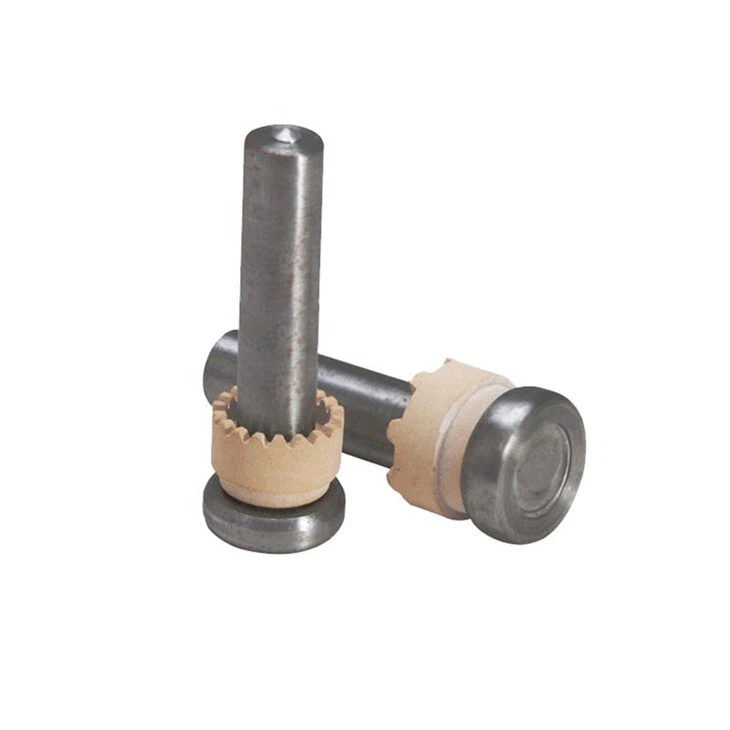
ISO 13918 (SD) Shear Connector, Shear Stud SD
Description
Product Information
ISO 13918 (SD) is a standard that specifies the requirements for studs used for arc stud welding. This standard was introduced by the International Organization for Standardization (ISO) to ensure that the quality of arc stud welding is maintained and that the studs used for this process meet the required standards.
When it comes to arc stud welding, the quality and reliability of the studs used is of utmost importance. These studs are welded to a base metal using an electric arc, which creates a high-temperature plasma that melts the stud and the base material. The molten metal then solidifies, creating a strong bond between the stud and the base material.
To ensure that the studs used for this process are of the required quality, ISO 13918 (SD) specifies the mechanical and dimensional properties of the studs. These properties include the diameter, length, thread form, and mechanical strength of the studs. In addition, the standard also defines the testing procedures to be used to ensure that the studs meet these requirements.
ISO 13918 (SD) also specifies the design requirements for the studs. For example, the standard requires that the studs be of a suitable shape and size to ensure proper penetration and fusion with the base material. The design also needs to take into account the properties of the base material, the welding conditions, and the required strength of the weld.
One of the key benefits of using studs that meet the requirements of ISO 13918 is the consistency and reliability of the welding process. By using high-quality studs that meet the standard, the welder can be confident that the studs will melt and fuse properly, creating a strong and durable weld. This can help to reduce the risk of defects and failures in the weld, which can be costly and time-consuming to fix.
In conclusion, ISO 13918 (SD) is an important standard that ensures the quality and reliability of studs used for arc stud welding. By specifying the mechanical and dimensional properties, design requirements, and testing procedures for studs, the standard helps to maintain the high quality of arc stud welding and reduce the risk of defects and failures in the weld.
Shear Connector, Shear Stud SD
MYWAY Shear Connector for Steel-Concrete Structure.
Shear Connector is one of the typical applications of arc stud welding technology, which is composed of shank, cheese head and welding end with aluminium arc flux.
It is mainly used in steel-concrete structure buildings to provide the anti-shear force between the steel structure components and the concrete layer, which is combined into a stress whole.
● ISO 13918 Welding – Studs and ceramic ferrules for arc stud welding
● AWS D1.1 Structural Welding Code – Steel
● AWS D1.5 Bridge Welding Code
● AWS D1.6 Structural Welding Code – Stainless Steel
● GB/T 10433 Cheese Head Studs For Arc Stud Welding
● JIS B 1198 Headed Studs
Dimensions of shear stud (SD)
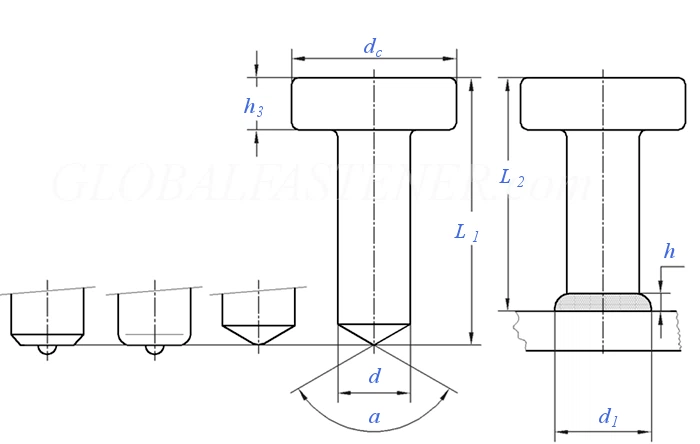
Dimensions in milimeters (mm)
| Screw Thread d |
| ||||||||||||||||||||||||||||||||||||||||||||||||||||||||||||||||||||||||||||||||||||||||||||||||||||||||||||||||||||||
|
| ||||||||||||||||||||||||||||||||||||||||||||||||||||||||||||||||||||||||||||||||||||||||||||||||||||||||||||||||||||||
| ①,a°≈140°±7° ②,The minimum of L2 is approximately three times d. is approximately three times d. |
Common Fastener Materials
Fasteners are fabricated from a variety of materials. These options include metals and polymers. Stainless steel offers strength and corrosion resistance. While polymer options have less strength than stainless, they are a good choice for resisting chemicals. The most common materials are:
- Stainless steel
- Alloy steel
- Low carbon steel
- Medium carbon steel
- Titanium
- Polymers, such as nylon
Finish Options
The use of heat treatments and application of various finishes, also known as “plating,” affects the look and performance of fasteners. Finishes provide material stability and protect the fasteners from corrosion and rust. Below are some common heat treatment and finish benefits:
- Zinc coating – Most common, low cost, resists corrosion and rust
- Galvanized – Superior corrosion protection, anti-seize, higher upfront investment
- Stainless – Great for humid environments, strong, ideal for electrical or mechanical uses
- Black – Adds color, provides better grip, deflects light
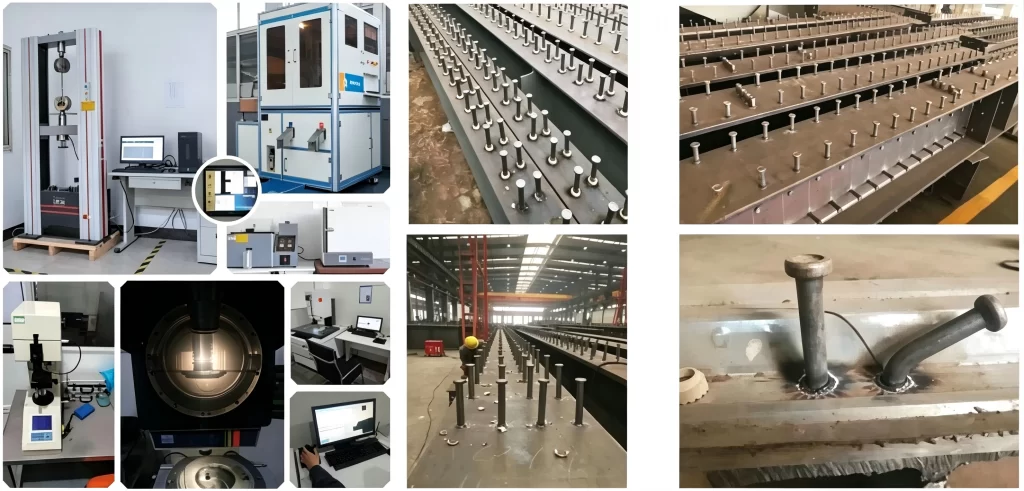
Our Weld Studs Factory
MYWAY Services
MYWAY strictly complies with the requirements of the ISO9001 quality certification system, strictly controls quality, implements it at every level, and assigns responsibilities to everyone to ensure the healthy operation of the comprehensive system of design, production, sales, and after-sales service. In order to strengthen communication with users, better provide users with high-quality products, and better serve users with the brand, we have made the following commitments:
1. Products are designed and manufactured in strict accordance with standards. We produce non-standard products according to the drawings provided by customers.
2. Pre-sales service
Serving customers: product introduction, answers to technical questions, and engineering-assisted design.
3. Sales service
1). The products are based on the needs of user orders, with quality and delivery time as the premise.
2). During the use of the product, our company regularly organizes technical and quality inspection service personnel to visit and solicit feedback from users on the quality, usage status, improvement opinions and other aspects of the product, so as to further improve product quality.
4. After-sales service
1). If users have any problems or information when using our products, please report them back to the company in a timely manner so that the company can properly handle and improve them so that our products can better meet your requirements.
2). If the product does not work properly or is damaged due to quality problems during the warranty period, our company will be responsible for free repair or replacement. If the product is damaged or does not work properly due to improper use by the user, our company can provide repair services. If users need it, our company can provide users with free pre-sales and after-sales technical consultation.
.After-sales service. Users are required to fill in the product service and quality feedback information form and make appraisal opinions in order to improve the quality of MYWAY products and services.
FAQ
Q: What is stud welding used for?
A: Stud welding is a widely used joining process within the industry that addresses various construction and assembly needs. The rapid and reliable attachment of fasteners onto metal surfaces along with its durable and strong bond means that it is very often a preferred or essential fastening process.
Q: How strong are weld studs?
A: Tensile Strength: 60,000 PSI Min. Yield Strength: 50,000 PSI Min.
Q: What is a CD weld stud?
A: Capacitor Discharge stud welding is a semi-automatic arc welding process. However, with CD welding, you have the ability to weld small diameter studs to very thin material.
Q: Is stud welding hard?
A: It’s Easier. Stud welding is a far more straightforward process than resistance welding. It only requires one step to join your materials together. To connect your two metals permanently, all you need is a few weld studs and your equipment.
Q: What grade are weld studs?
A: Stainless threaded weld studs are mostly stocked in grade 302HQ / 30430. on the weld end to preclude the plating from compromising the weld quality. studs can be annealed to a maximum of 75 Rockwell B hardness and 85 Rockwell B hardness, respectively.
Q: What is the spacing for welded studs?
A: The minimum spacing between the centre- lines of shear studs is governed by access requirements for the stud welding gun. A minimum spacing of between 60 mm and 70 mm is possible, depending on the size of the studs, but a minimum of 100 mm is pre- ferred by fabricators.
Q: How do you test a weld stud?
A: A simple way to test the shear torque of threaded studs is apply a straight pull of the Weld Stud Test Tool (no side load). When the wrench breaks-over and the stud is still attached then it passed. If the threaded stud breaks off – then it failed.
Q: Can Stud Welding Be Done In The Rain?
A: Recommendation for stud welding in cold or wet weather: Stud Welding shall not be done when the base metal temperature is below 0°F or when the surface is wet or exposed to falling rain or snow.
Q: What material is used for stud welding?
A: Both mild steels and stainless steels can be stud welded. In general, steel is great as a stud and base materials as it suits the drawn arc stud welding and capacitor discharge stud welding processes.
Q: How fast is stud welding?
A: Short cycle stud welding is a quicker form of the drawn arc stud welding process for attaching metal studs and other fasteners to metal sheets. It only takes from 10 up to 100 milliseconds to attach the stud to the parent sheet using this method.
Q: What's the hardest type of welding?
A: Tungsten Inert Gas (TIG) welding is widely considered the most challenging welding process to learn. The sheer complexity of the technique requires more practice and focus to master than other less-technical welding methods. TIG welding also results in some of the strongest and sturdiest welds in the industry.
Q: What is the minimum thickness for stud welding?
A: Short Cycle requires a minimum thickness of 1.5mm (regardless of diameter); Drawn Arc requires a minimum material thickness of one third of the stud diameter (e.g. 12mm Diameter has a minimum thickness of 4mm sheet).
Q: Are welds as strong as bolts?
A: There’s a common misconception that welding is stronger than bolting, but that simply isn’t true. Bolting is just as strong as welding—and can be stronger in some situations. The strength of a weld is largely determined by the expertise of the welder.
Q: What are the positions for welding studs?
A: Welding Position: SC Studs can be welded in the down hand, side hand and overhead positions. In the side hand and overhead positions this becomes increasingly more difficult as the stud diameter increases.
Q: What is the hammer test for stud welding?
A: All studs should be checked in this way by the welder or the welder’s mate. The bend test requires the head of a stud to be displaced laterally by approximately a quarter of its height using a 6 kg hammer. The weld should then be checked for signs of cracking or lack of fusion.
Q: What metal cannot be welded?
A: Some examples of material combinations that cannot be fusion welded successfully are aluminum and steel (carbon or stainless steel), aluminum and copper, and titanium and steel. Nothing can be done to alter their metallurgical properties.
Q: What PPE is needed for stud welding?
A: Protective clothing including long sleeves and long pants is recommended for protection during application of weld studs. Welding gloves, aprons or jackets are also recommended where appropriate. Respiratory protection is not needed in well ventilated areas.
Q: Is stud welding standard?
A: ISO 14555 – Welding – Arc stud welding of metallic materials. This is an important standard in stud welding. It covers the requirements for the qualification of welding personnel and welding procedures for the mechanical fastening of accessories using stud welding processes.
We’re professional bolt manufacturers and suppliers in China, specialized in providing high quality customized products with low price. We warmly welcome you to wholesale or buy discount bolt in stock here from our factory. Contact us for free sample.