Home » What Are The Applications Of Stainless Steel Lock Nuts?
Reuse of Fasteners: A Sustainable Solution in Modern Construction
Reusing fasteners is a practical and sustainable solution to reduce construction waste and environmental impact. As challenges exist in different
The Hidden Threat of Fastener Fatigue
Fastener fatigue is a phenomenon that occurs when a fastener undergoes repeated cycles of stress over time which is common
Dangers of Fastener Embrittlement
Understanding the threats that can risk the integrity of components in structures such as fastener embrittlement can lead to preventing
The Future of Smart Fasteners
The future of using smart fasteners in manufacturing, construction, and other industries has a bright potential to enhance the functionality
High-Performance Fasteners for Aerospace
As technology advances and materials continue to evolve, the aerospace industry rely on innovative fastener solutions to meet the growing
Fastener Testing and Quality Control
For some applications that require intricate and reliable fastener devices like automotive, aerospace, and construction, safety is a paramount detail
What Are The Applications Of Stainless Steel Lock Nuts?
Anical Field
In the machinery manufacturing industry, stainless steel lock nuts are widely used, such as for automotive manufacturing in the engine, chassis, etc. In addition, they are also widely used in the manufacture of electrical equipment, computer equipment and other equipment, in order to quickly and easily fix and connect a variety of parts and components. At the same time, the strength, corrosion resistance and durability of stainless steel lock nuts and other advantages, to ensure the safety and stability of mechanical equipment.
B. Construction field
In the field of construction, stainless steel lock nuts are widely used in large building structures, such as steel structures, bridges, tall buildings, etc., to ensure the long-term maintenance of the building’s solid performance. Stainless steel lock nuts can also be used in the BTS room cabinets fixed, because these equipment in the room environment need to be frequently accessed and maintained, lock nuts can guarantee the safety and precision of the cabinet fixed equipment.
C. Marine field
In the field of ships, the application of stainless steel lock nuts is also very wide. Mainly used to fix pipelines, machine tools and other equipment. The importance of lock nuts in this field is that in the marine environment is subject to the destruction of strong waves, tides and other natural factors, the need for a high degree of corrosion resistance and stability to ensure the stability and safety of ship operations.
D. Electromechanical equipment field
In the field of electromechanical equipment, the application of stainless steel lock nuts is also very wide. For example, it is often used to assemble cars, bicycles, power tools and other mechanical equipment to improve the precision of mechanical equipment and fix the position of various parts.
To sum up, stainless steel lock nuts, as an important connection, are widely used in machinery, automobiles, construction, ships and electromechanical equipment, etc., and play an extremely important role. Not only convenient and fast, but also has the advantages of high strength, durability, corrosion resistance and stability, etc. These advantages make stainless steel lock nuts occupy an important position in many fields. Buy stainless steel lock nuts choose MYWAY Metal, factory supply, for you to save 20% of the purchase cost. At the same time, we will do our best to provide our customers with high quality bolts and competent nut suppliers. If you are interested, welcome to contact us at kathy@myway-metal.com, we will send you a complete bolt atlas and a free preferential quotation.
2. Hardness and Strength
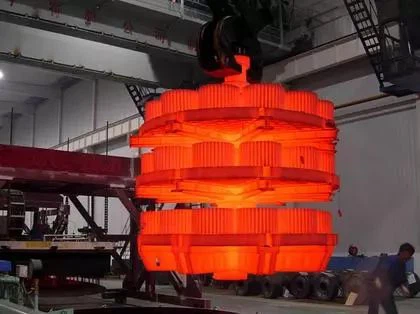
In the inspection of threaded fasteners, we cannot simply look up the hardness value in the relevant manual and convert it into a strength value. There is an influence of hardenability factor. Because GB3098.1 and GB3098.3 stipulate that the arbitration hardness is measured at the 1/2 radius of the cross section of the part. The tensile test specimen is also cut from the 1/2 radius. Because it is not ruled out that the center part of the part has a low hardness and low strength part.
Generally speaking, the material has good hardenability and the hardness can be evenly distributed on the cross section of the screw. As long as the hardness is qualified, the strength and guaranteed stress can also meet the requirements. However, when the hardenability of the material is poor, although the hardness is qualified according to the specified parts inspection, the strength and guaranteed stress often do not meet the requirements. Especially when the surface hardness tends to the lower limit.
In order to control the strength and guaranteed stress within the qualified range, the lower limit of hardness is often increased. For example, the hardness control range of grade 8.8: for specifications below M16, it is 26~31HRC, and for specifications above M16, it is appropriate to be 28~34HRC; for grade 10.9, it is appropriate to control it at 36~39HRC. Grades above 10.9 are another matter.
3. Re-Tempering Test
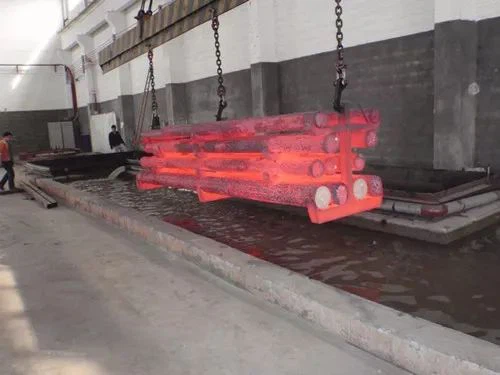
Bolts, screws and studs of grades 8.8 to 12.9 should be re-tempered for 30 minutes at a temperature 10°C lower than the lowest tempering temperature in actual production. On the same specimen, the difference in the average hardness of three points before and after the test shall not exceed 20HV.
The re-tempering test can check the incorrect operation of using too low a temperature to barely reach the specified hardness range due to insufficient quenching hardness, and ensure the comprehensive mechanical properties of the parts. In particular, threaded fasteners made of low-carbon martensitic steel use low-temperature tempering. Although other mechanical properties can meet the requirements, the residual elongation fluctuates greatly when measuring the guaranteed stress, which is much greater than 12.5um. Moreover, sudden fractures may occur under certain conditions of use. Sudden fractures have occurred in some automotive and construction bolts. The above phenomenon can be reduced when tempering at the lowest tempering temperature. However, special caution should be exercised when making 10.9 grade bolts with low-carbon martensitic steel.
4. Hydrogen Embrittlement Inspection
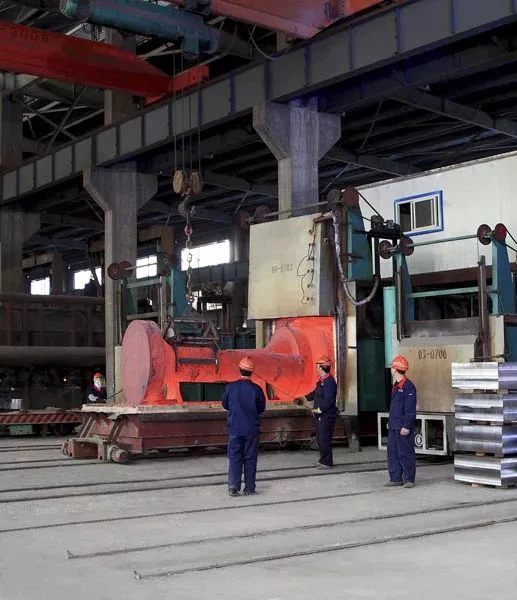
The sensitivity of hydrogen embrittlement increases with the strength of the fastener. For external threaded fasteners of grade 10.9 and above, surface hardened self-tapping screws, and combination screws with hardened steel washers, etc., dehydrogenation treatment should be carried out after electroplating.
Dehydrogenation treatment is generally carried out in an oven or tempering furnace at 190~230℃ for more than 4 hours to diffuse hydrogen.
Threaded fasteners can be tightened on a special fixture until the screw is subjected to a tensile force that satisfies a certain stress, and then maintained for 48 hours. After loosening, the threaded fasteners do not break. This method is used as a hydrogen embrittlement inspection method.