
Home » What Are The Fastener Thread Milling Tools?
Reuse of Fasteners: A Sustainable Solution in Modern Construction
Reusing fasteners is a practical and sustainable solution to reduce construction waste and environmental impact. As challenges exist in different
The Hidden Threat of Fastener Fatigue
Fastener fatigue is a phenomenon that occurs when a fastener undergoes repeated cycles of stress over time which is common
Dangers of Fastener Embrittlement
Understanding the threats that can risk the integrity of components in structures such as fastener embrittlement can lead to preventing
The Future of Smart Fasteners
The future of using smart fasteners in manufacturing, construction, and other industries has a bright potential to enhance the functionality
High-Performance Fasteners for Aerospace
As technology advances and materials continue to evolve, the aerospace industry rely on innovative fastener solutions to meet the growing
Fastener Testing and Quality Control
For some applications that require intricate and reliable fastener devices like automotive, aerospace, and construction, safety is a paramount detail
What Are The Fastener Thread Milling Tools?
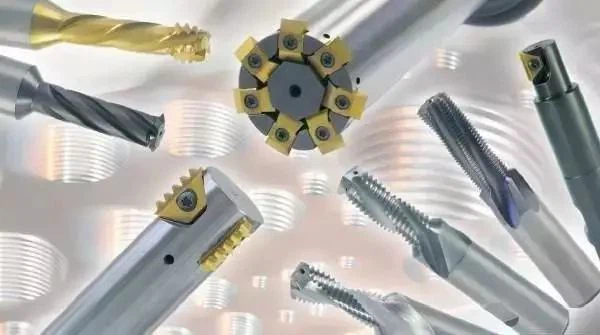
1. Ordinary Machine-Clamped Thread Milling Cutter
Machine-clamped thread milling cutter is the most commonly used and inexpensive tool for thread milling. Its structure is similar to that of ordinary machine-clamped milling cutters, consisting of a reusable tool bar and a conveniently replaceable blade. If you need to process a tapered thread, you can also use a special tool bar and blade for processing a tapered thread. This blade has multiple thread cutting teeth. The tool can process multiple thread teeth at a time by processing along the spiral line. For example, if you use a milling cutter with 5 2mm thread cutting teeth, you can process 5 thread teeth with a thread depth of 10mm by processing along the spiral line. In order to further improve processing efficiency, you can choose a multi-blade machine-clamped thread milling cutter.
2. Ordinary Integral Thread Milling Cutter
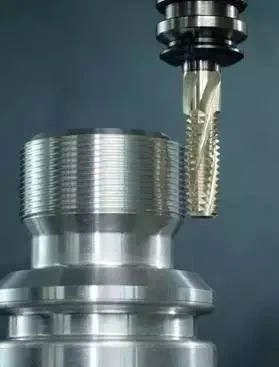
Integral thread milling cutters are mostly made of integral carbide materials, and some are also coated. Integral thread milling cutters are compact in structure and are more suitable for processing medium and small diameter threads; there are also integral thread milling cutters for processing tapered threads. This type of tool has good rigidity, especially integral thread milling cutters with spiral grooves, which can effectively reduce cutting load and improve processing efficiency when processing high-hardness materials. The cutting edge of the integral thread milling cutter is covered with thread processing teeth. The entire thread processing can be completed by processing along the spiral line for one circle, without the need for layered processing like machine-clamped cutters, so the processing efficiency is higher, but the price is also relatively expensive.
3. Integral Thread Milling Cutter with Chamfering Function
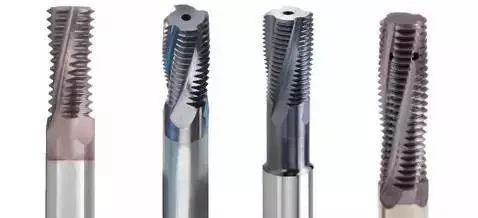
The structure of the integral thread milling cutter with chamfering function is similar to that of the ordinary integral thread milling cutter, but there is a special chamfering edge at the root of the cutting edge, which can be used to chamfer the end of the thread while processing the thread. There are three ways to process chamfers. When the tool diameter is large enough, the chamfering edge can be used directly to countersink the chamfer. This method is limited to processing the chamfer of the internal thread hole. When the tool diameter is small, the chamfering edge can be used to process the chamfer through circular motion. However, when using the chamfering edge at the root of the cutting edge for chamfering, it is necessary to pay attention to the gap between the thread cutting part of the tool and the thread to avoid interference.
4. Thread Drill Milling Cutter
The thread drill milling cutter is made of solid carbide and is a high-efficiency tool for processing small and medium diameter internal threads. The thread drill milling cutter can complete the drilling of thread bottom holes, chamfering of hole mouths and internal thread processing at one time, reducing the number of tools used. However, the disadvantage of this tool is that it has poor versatility and is relatively expensive. The tool consists of three parts: the drilling part at the head, the thread milling part in the middle, and the chamfering edge at the root of the cutting edge. The diameter of the drilling part is the bottom diameter of the thread that the tool can process. Due to the limitation of the diameter of the drilling part, a thread drill milling cutter can only process one specification of internal threads. When selecting a thread drill milling cutter, not only the specifications of the threaded hole to be processed should be considered, but also the matching of the effective processing length of the tool and the depth of the hole to be processed should be paid attention to, otherwise the chamfering function cannot be achieved.
5. Deep Thread Milling Tool
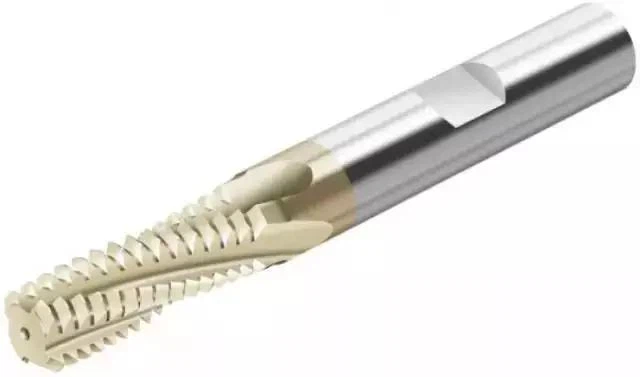
A deep thread milling tool is a single-tooth thread milling tool. A general thread milling tool has multiple thread processing teeth on its blade. The contact area between the tool and the workpiece is large, the cutting force is also large, and the tool diameter must be smaller than the thread hole diameter when processing internal threads. Since the tool body diameter is limited, the rigidity of the tool is affected, and the tool is subjected to force on one side when milling threads. When milling deeper threads, the tool is prone to let go, affecting the thread processing accuracy. Therefore, the effective cutting depth of a general thread milling tool is about 2 times the diameter of its tool body. The use of a single-tooth deep thread milling tool can better overcome the above shortcomings. Due to the reduction of cutting force, the thread processing depth can be greatly increased, and the effective cutting depth of the tool can reach 3 to 4 times the diameter of the tool body.
6. Thread Milling Tool System
Versatility and efficiency are a prominent contradiction of thread milling cutters. Some tools with composite functions have high processing efficiency but poor versatility, while tools with good versatility are often not efficient. To solve this problem, many tool manufacturers have developed modular thread milling tool systems. The tool is generally composed of a tool holder, a countersink chamfering blade and a universal thread milling cutter. Different types of countersink chamfering blades and thread milling cutters can be selected according to processing requirements. This tool system has good versatility and high processing efficiency, but the tool cost is high.
The above summarizes the functions and characteristics of several commonly used thread milling tools. When milling threads, cooling is also very important. It is recommended to use machine tools and tools with internal cooling functions. Because the external coolant is not easy to enter under the action of centrifugal force when the tool rotates at high speed. In addition to cooling the tool well, the internal cooling method is more important. When processing blind hole threads, high-pressure coolant helps chip removal. When processing small-diameter internal thread holes, a higher internal cooling pressure is especially required to ensure smooth chip removal. In addition, when selecting thread milling tools, specific processing requirements should be considered comprehensively, such as production batch, number of screw holes, workpiece material, thread accuracy, size specifications and many other factors, and the tools should be selected comprehensively.