Home » Choosing The Right Self-drilling Screws
Reuse of Fasteners: A Sustainable Solution in Modern Construction
Reusing fasteners is a practical and sustainable solution to reduce construction waste and environmental impact. As challenges exist in different
The Hidden Threat of Fastener Fatigue
Fastener fatigue is a phenomenon that occurs when a fastener undergoes repeated cycles of stress over time which is common
Dangers of Fastener Embrittlement
Understanding the threats that can risk the integrity of components in structures such as fastener embrittlement can lead to preventing
The Future of Smart Fasteners
The future of using smart fasteners in manufacturing, construction, and other industries has a bright potential to enhance the functionality
High-Performance Fasteners for Aerospace
As technology advances and materials continue to evolve, the aerospace industry rely on innovative fastener solutions to meet the growing
Fastener Testing and Quality Control
For some applications that require intricate and reliable fastener devices like automotive, aerospace, and construction, safety is a paramount detail
Choosing The Right Self-drilling Screws
1. Material Compatibility
One of the primary factors to consider when choosing self-drilling screws is the compatibility with the materials you are working with. Although self-drilling screws are designed to be used in wood, metal, concrete, and plastic, using the wrong type of screw can lead to inefficiency, damage, or failure. It is important to ensure the material compatibility within the screw and the surface of the application.
2. Screw Size and Length
The screw size and length of self-drilling screws is a crucial part that ensures a secure and stable connection. The diameter and length of the screw should be appropriate for the thickness of the materials being fastened. When screws are too short they may not be able to provide sufficient grip, while overly long screws can damage the materials or protrude on the opposite side.
3. Head Type
There are various head types of self-drilling screws including flat, pan, hex, and round heads. The choice of head type should be based on the application and aesthetic preferences. Additionally, some head types are designed for specific tools which can ease the installation process when selected properly.
4. Thread Type
Self-drilling screws can have different thread types such as fine thread and coarse thread. Fine threaded screws provide a stronger grip and are suitable for dense materials, while coarse threaded screws work efficiently in softer materials. The choice depends on the materials of application which can be specific for different projects.
5. Coating and Finish
The coating or finish of self-drilling screws can affect their durability and resistance to corrosion. Some of the common coatings are zinc, galvanized, stainless steel, and specialty coatings like ceramic or epoxy. When selecting the coating of self-drilling screws it is important to consider the environment and conditions in which the screws will be used for. For example, outdoor applications or areas with high moisture should use screws with a corrosion-resistant coating.
6. Point Style
Self-drilling screws have different point styles such as sharp, drill point, or modified truss point. The point style influences the ease of penetration into the material. Sharp points are suitable for soft materials, while drill points work well with harder materials. It is critical to choose the appropriate point style based on the project’s requirements.
7. Load-Bearing Capacity
Structural applications often require load-bearing qualities on self-drilling screws. Manufacturers provide load tables and guidelines to help you choose screws that can support the expected loads in your projects. It is necessary to ensure that you select the right load-bearing requirements for the safety and structural integrity of components.
8. Quantity and Budget
Lastly, considering the project’s scale and budget is a factor that is essential to achieve success in fastening. Self-drilling screws are available in package sizes, from small quantities for DIY projects to bulk packages for professional use. Choose the quantity that meets the needs of your projects and stay within budget to save money and reduce waste of components.
Purchase high-quality wholesale self-drilling screws from a reliable and leading manufacturer and supplier – Zhejiang Myway Co.,Ltd. We carry a diverse range of fasteners for different industries and applications.
2. Hardness and Strength
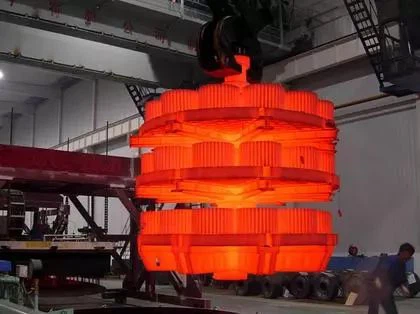
In the inspection of threaded fasteners, we cannot simply look up the hardness value in the relevant manual and convert it into a strength value. There is an influence of hardenability factor. Because GB3098.1 and GB3098.3 stipulate that the arbitration hardness is measured at the 1/2 radius of the cross section of the part. The tensile test specimen is also cut from the 1/2 radius. Because it is not ruled out that the center part of the part has a low hardness and low strength part.
Generally speaking, the material has good hardenability and the hardness can be evenly distributed on the cross section of the screw. As long as the hardness is qualified, the strength and guaranteed stress can also meet the requirements. However, when the hardenability of the material is poor, although the hardness is qualified according to the specified parts inspection, the strength and guaranteed stress often do not meet the requirements. Especially when the surface hardness tends to the lower limit.
In order to control the strength and guaranteed stress within the qualified range, the lower limit of hardness is often increased. For example, the hardness control range of grade 8.8: for specifications below M16, it is 26~31HRC, and for specifications above M16, it is appropriate to be 28~34HRC; for grade 10.9, it is appropriate to control it at 36~39HRC. Grades above 10.9 are another matter.
3. Re-Tempering Test
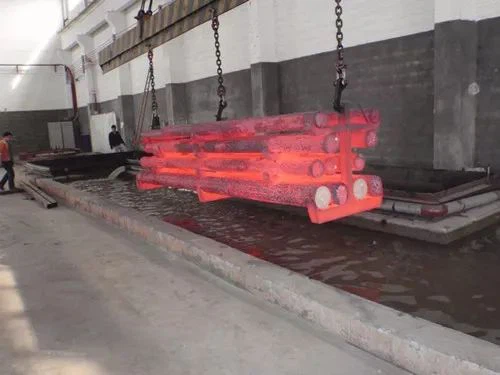
Bolts, screws and studs of grades 8.8 to 12.9 should be re-tempered for 30 minutes at a temperature 10°C lower than the lowest tempering temperature in actual production. On the same specimen, the difference in the average hardness of three points before and after the test shall not exceed 20HV.
The re-tempering test can check the incorrect operation of using too low a temperature to barely reach the specified hardness range due to insufficient quenching hardness, and ensure the comprehensive mechanical properties of the parts. In particular, threaded fasteners made of low-carbon martensitic steel use low-temperature tempering. Although other mechanical properties can meet the requirements, the residual elongation fluctuates greatly when measuring the guaranteed stress, which is much greater than 12.5um. Moreover, sudden fractures may occur under certain conditions of use. Sudden fractures have occurred in some automotive and construction bolts. The above phenomenon can be reduced when tempering at the lowest tempering temperature. However, special caution should be exercised when making 10.9 grade bolts with low-carbon martensitic steel.
4. Hydrogen Embrittlement Inspection
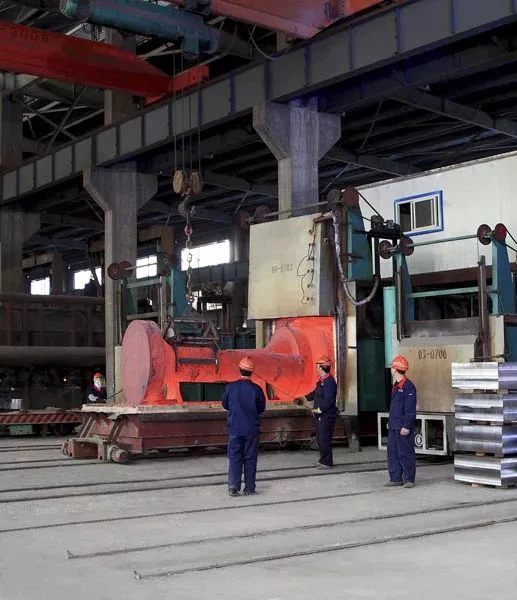
The sensitivity of hydrogen embrittlement increases with the strength of the fastener. For external threaded fasteners of grade 10.9 and above, surface hardened self-tapping screws, and combination screws with hardened steel washers, etc., dehydrogenation treatment should be carried out after electroplating.
Dehydrogenation treatment is generally carried out in an oven or tempering furnace at 190~230℃ for more than 4 hours to diffuse hydrogen.
Threaded fasteners can be tightened on a special fixture until the screw is subjected to a tensile force that satisfies a certain stress, and then maintained for 48 hours. After loosening, the threaded fasteners do not break. This method is used as a hydrogen embrittlement inspection method.