Home » Fastener Knowledge (Bolt, Nut,Screw)
Reuse of Fasteners: A Sustainable Solution in Modern Construction
Reusing fasteners is a practical and sustainable solution to reduce construction waste and environmental impact. As challenges exist in different
The Hidden Threat of Fastener Fatigue
Fastener fatigue is a phenomenon that occurs when a fastener undergoes repeated cycles of stress over time which is common
Dangers of Fastener Embrittlement
Understanding the threats that can risk the integrity of components in structures such as fastener embrittlement can lead to preventing
The Future of Smart Fasteners
The future of using smart fasteners in manufacturing, construction, and other industries has a bright potential to enhance the functionality
High-Performance Fasteners for Aerospace
As technology advances and materials continue to evolve, the aerospace industry rely on innovative fastener solutions to meet the growing
Fastener Testing and Quality Control
For some applications that require intricate and reliable fastener devices like automotive, aerospace, and construction, safety is a paramount detail
Fastener Knowledge (Bolt, Nut,Screw)
Fasteners include: bolts, studs, screws, nuts, washers, pins Fasteners are also called standard parts on the market. It is a kind of mechanical parts used for fastening and connection, and it has a wide range of applications. The characteristics of fasteners: There are many varieties and specifications, different performances and uses, and the degree of standardization, serialization and generalization is extremely high. Therefore, some people call a type of fasteners that have national (industry) standards as standard fasteners, or standard parts for short.
Because the specifications, dimensions, tolerances, weight, performance, surface conditions, marking methods of each specific fastener product, as well as the specific requirements for acceptance inspection, marking and packaging, are separately stipulated in several national (industry) standards , Such as the British system, the German system and the American system. Fasteners are the most widely used mechanical basic parts. With my country’s accession to the WTO in 2001, it has entered the ranks of major international trading nations. my country’s fastener products are exported to various countries in the world, and fastener products from all over the world are also pouring into the Chinese market. Fasteners, as one of the products with a large import and export volume in my country, are in line with international standards. It is of great significance to promote Chinese fastener companies to the world and to promote the full participation of fastener companies in international cooperation and competition. Strategic significance.
Fasteners are a general term for a type of mechanical parts used when two or more parts (or components) are fastened and connected into a whole. Also called standard parts on the market.
It usually includes the following 12 types of parts:
1. Bolt: A type of fastener consisting of two parts, a head and a screw (cylinder with external threads), which need to be matched with a nut to fasten and connect two parts with through holes. This type of connection is called bolt connection. If the nut is unscrewed from the bolt, the two parts can be separated, so the bolt connection is a detachable connection.
2. Stud: There is no head, only a type of fastener with threads on both ends. When connecting, one end of it must be screwed into the part with internal threaded hole, the other end must pass through the part with through hole, and then the nut is screwed on, even if the two parts are tightly connected as a whole. This type of connection is called a stud connection, which is also a detachable connection. It is mainly used where one of the connected parts has a large thickness, requires a compact structure, or is not suitable for bolt connection due to frequent disassembly.
3. Screw: It is also a type of fastener composed of two parts: head and screw. According to the purpose, it can be divided into three categories: machine screws, set screws and special purpose screws. Machine screws are mainly used for a tightening connection between a part with a threaded hole and a part with a through hole, without the need for a nut to fit (this type of connection is called a screw connection, which is also a detachable connection; it can also be Cooperate with the nut, used for the fastening connection between two parts with through holes.) The set screw is mainly used to fix the relative position between the two parts. Special purpose screws such as eyebolts are used for lifting parts.
4. Nut: With internal threaded holes, the shape is generally flat hexagonal column, and also flat square column or flat cylinder. It is used with bolts, studs or machine screws to fasten and connect two parts. It becomes a whole.
5. Self-tapping screws: similar to machine screws, but the thread on the screw is a special self-tapping screw thread. It is used to fasten and connect two thin metal components into one piece. Small holes need to be made in the component in advance. Because this kind of screw has high hardness, it can be directly screwed into the hole of the component. Form a responsive internal thread. This type of connection is also a detachable connection.
6. Wood screw: It is also similar to machine screw, but the thread on the screw is a special rib for wood screw, which can be directly screwed into the wooden component (or part) to use a metal (or non-metal) with a through hole. The parts are firmly connected to a wooden component. This connection is also a detachable connection. 7. Washer: A type of fastener with an oblate ring shape. It is placed between the supporting surface of bolts, screws or nuts and the surface of the connected parts, which increases the contact surface area of the connected parts, reduces the pressure per unit area and protects the surface of the connected parts from damage; another type of elastic washer, It can also play a role in preventing the nut from loosening.
8. Retaining ring: It is installed in the shaft groove or hole groove of the machine and equipment, and prevents the parts on the shaft or hole from moving left and right.
9. Pins: Mainly used for positioning parts, and some are also used for connecting parts, fixing parts, transmitting power or locking other fasteners.
10. Rivet: A type of fastener consisting of two parts, a head and a nail shaft, used to fasten and connect two parts (or components) with through holes to make them into a whole. This type of connection is called rivet connection, or riveting for short. Belong to and non-detachable connection. Because to separate the two parts connected together, the rivets on the parts must be broken.
11. Assembled parts and connection pairs: Assembled parts refer to a type of fasteners supplied in combination, such as a combination of machine screws (or bolts, self-supplied screws) and flat washers (or spring washers, lock washers); connection; The secondary refers to a type of fastener supplied by a combination of a certain special bolt, nut and washer, such as a high-strength large hexagonal head bolt connection pair for steel structures.
12. Welding nails: Because of the heterogeneous fasteners composed of light energy and nail heads (or no nail heads), they are fixedly connected to a part (or component) by welding so as to be connected with other parts.
Each fastener product must involve some standards in several aspects: 1) Fastener product size standards: specify the content of the basic size of the product; for threaded products, it also includes the basic size of the thread, thread end, shoulder distance, undercut and chamfer, and the end of external threaded parts Dimensions and other aspects.
2) Standards for the technical conditions of fastener products. Specifically, it includes the following standards:
a) Fastener product tolerance standards: specify product size tolerances and geometric tolerances.
b) Mechanical performance standards of fastener products: specify the marking method of product mechanical performance levels and the content of mechanical performance items and requirements; some fastener products will change this content to product material performance or work performance Aspect content.
c) Standards for surface defects of fastener products: specify the types and specific requirements of product surface defects.
d) Surface treatment standards of fastener products: specify the types of product surface treatments and specific requirements.
e) Fastener product test standards: specify the test contents of the various performance requirements mentioned above.
3) Fastener product acceptance inspection, marking and packaging standards: specify the qualified quality level and sampling plan of the random inspection items during the factory acceptance of the product, as well as the content of the product marking method and packaging requirements.
4) Standards on the marking method of fastener products: specify the complete marking method and simplified marking method of the product.
5) Other standards of fasteners: such as the standard of fastener terminology, the standard of fastener product weight, etc.
Standard (German standard and American standard are commonly used)
GB (National Standard)
ISO (International Standard)
DIN (German system)
JIS (Japanese standard)
ANSI /ASME (American National Standards Institute-ANSI; American Society Of Mechanical Engineers-ASME) (American Standard)
BS (Inch) IFI =Industrial Fastener Institute is the standard of the American Industrial Fastener Association. BA (Inch)
Thread
M. MF (Metric Tooth)
UNC. (American Coarse Tooth)
UNF (American fine teeth)
UNEF (U.S. ultra-fine teeth)
B.S.W. Standard Wyeth Coarse Thread Series, General Purpose Cylindrical Thread (Inch Thread)
B.S.F. standard Wyeth fine pitch series, general purpose
Cylindrical thread (inch thread)
Fine pitch thread full thread
Screw head type
IHH=ind hex head saw hex head
PH=phillips cross groove
Pan round head (pan head)
Oval half countersunk head
H.W.H.. Hexagonal small flange
H.W.F. Hexagon Large Flange
CSK Salad Head (Sink Head)
Large wafer
Bugle horn
Truss pan head with cushion
Pozi metric trough Serra-tion under the cushion with flowers
Flower Head Flower Head
6-bobes recess
Cup head
Common fastener names
split washer spring washer (generally manufacturers will call washer “washer”)
flat washer
Self tapping screw
Self drilling screw
drywall screw drywall screw/drywall screw/wall screw
high low screw
collated screw
Concrete screw
Tri-lobular thread screw
kep nut
acorn nut stainless steel screw wire
wing washer
eye bolt eye bolt (also called eye bolt, in fact, this is called a lot, probably because of different regions)
Piston bolt
Winding bolt
Hexagon head bolts
Hexagon flange bolts
Hexagon flange bolts
Carriage bolt Carriage bolt Square head bolt
Flat countersink square neck bolts
Flat counter sunk nib bolts
Cross recessed pan head tapping screws
(If you see # 2 or # 20, etc. on the drawing, it means that the head of the screw is suitable for a No. 2 or No. 20 screwdriver)
Surface treatment
BO=black oxide oxidation blackening (if only black is marked, it means that it is dyed black)
Zinc plated
cementation
Nylon patch is resistant to falling (when I first saw it, it was a literal translation of “nylon sheet”. When it was shown to the manager, the manager looked at the drawing for a long time and told me that you should check the English of resistant to falling, sure enough— )
Raw material: Raw material
Spheroidizing annealing: Annealing
Cold drawing: Drawing
Cold heading: Forming
Machining: Machining
Thread forming: Roll Threading
Heat treatment: heat-treatment
Surface treatment: finish
ehydrogenation: Lustrating hydrogen
Inspection: Inspection
Customs code
73181500 bolt
73181600 nut
73182100 Washer
73181100 square head screw
73182300 Rivet
73181400 Self-tapping screws
73182400 Pin and open tail pin
2. Hardness and Strength
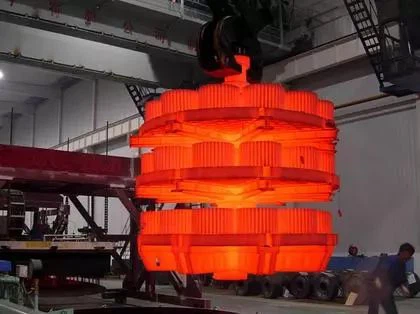
In the inspection of threaded fasteners, we cannot simply look up the hardness value in the relevant manual and convert it into a strength value. There is an influence of hardenability factor. Because GB3098.1 and GB3098.3 stipulate that the arbitration hardness is measured at the 1/2 radius of the cross section of the part. The tensile test specimen is also cut from the 1/2 radius. Because it is not ruled out that the center part of the part has a low hardness and low strength part.
Generally speaking, the material has good hardenability and the hardness can be evenly distributed on the cross section of the screw. As long as the hardness is qualified, the strength and guaranteed stress can also meet the requirements. However, when the hardenability of the material is poor, although the hardness is qualified according to the specified parts inspection, the strength and guaranteed stress often do not meet the requirements. Especially when the surface hardness tends to the lower limit.
In order to control the strength and guaranteed stress within the qualified range, the lower limit of hardness is often increased. For example, the hardness control range of grade 8.8: for specifications below M16, it is 26~31HRC, and for specifications above M16, it is appropriate to be 28~34HRC; for grade 10.9, it is appropriate to control it at 36~39HRC. Grades above 10.9 are another matter.
3. Re-Tempering Test
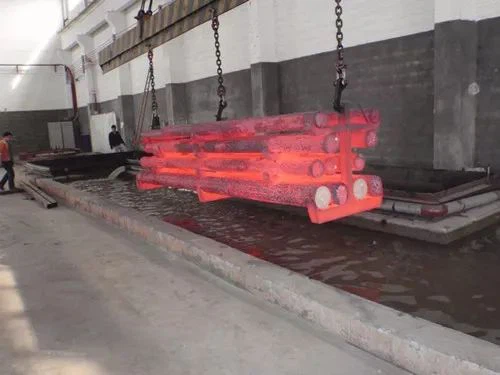
Bolts, screws and studs of grades 8.8 to 12.9 should be re-tempered for 30 minutes at a temperature 10°C lower than the lowest tempering temperature in actual production. On the same specimen, the difference in the average hardness of three points before and after the test shall not exceed 20HV.
The re-tempering test can check the incorrect operation of using too low a temperature to barely reach the specified hardness range due to insufficient quenching hardness, and ensure the comprehensive mechanical properties of the parts. In particular, threaded fasteners made of low-carbon martensitic steel use low-temperature tempering. Although other mechanical properties can meet the requirements, the residual elongation fluctuates greatly when measuring the guaranteed stress, which is much greater than 12.5um. Moreover, sudden fractures may occur under certain conditions of use. Sudden fractures have occurred in some automotive and construction bolts. The above phenomenon can be reduced when tempering at the lowest tempering temperature. However, special caution should be exercised when making 10.9 grade bolts with low-carbon martensitic steel.
4. Hydrogen Embrittlement Inspection
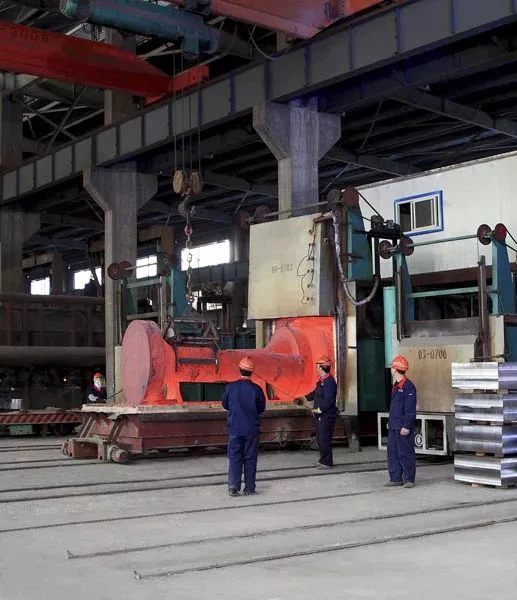
The sensitivity of hydrogen embrittlement increases with the strength of the fastener. For external threaded fasteners of grade 10.9 and above, surface hardened self-tapping screws, and combination screws with hardened steel washers, etc., dehydrogenation treatment should be carried out after electroplating.
Dehydrogenation treatment is generally carried out in an oven or tempering furnace at 190~230℃ for more than 4 hours to diffuse hydrogen.
Threaded fasteners can be tightened on a special fixture until the screw is subjected to a tensile force that satisfies a certain stress, and then maintained for 48 hours. After loosening, the threaded fasteners do not break. This method is used as a hydrogen embrittlement inspection method.