
Home » Fasteners | Introduction To Self-tapping Screws
Reuse of Fasteners: A Sustainable Solution in Modern Construction
Reusing fasteners is a practical and sustainable solution to reduce construction waste and environmental impact. As challenges exist in different
The Hidden Threat of Fastener Fatigue
Fastener fatigue is a phenomenon that occurs when a fastener undergoes repeated cycles of stress over time which is common
Dangers of Fastener Embrittlement
Understanding the threats that can risk the integrity of components in structures such as fastener embrittlement can lead to preventing
The Future of Smart Fasteners
The future of using smart fasteners in manufacturing, construction, and other industries has a bright potential to enhance the functionality
High-Performance Fasteners for Aerospace
As technology advances and materials continue to evolve, the aerospace industry rely on innovative fastener solutions to meet the growing
Fastener Testing and Quality Control
For some applications that require intricate and reliable fastener devices like automotive, aerospace, and construction, safety is a paramount detail
Fasteners | Introduction To Self-tapping Screws
The difference between self-tapping screws and ordinary screws is that ordinary screws must have processed screw holes before they can be screwed in. Self-tapping screws are not required, you can tap them yourself while screwing them in. In order to achieve the purpose of self-tapping, this kind of hexagonal drill tail screw usually has a pointed tip to facilitate squeezing into the object to be screwed in.
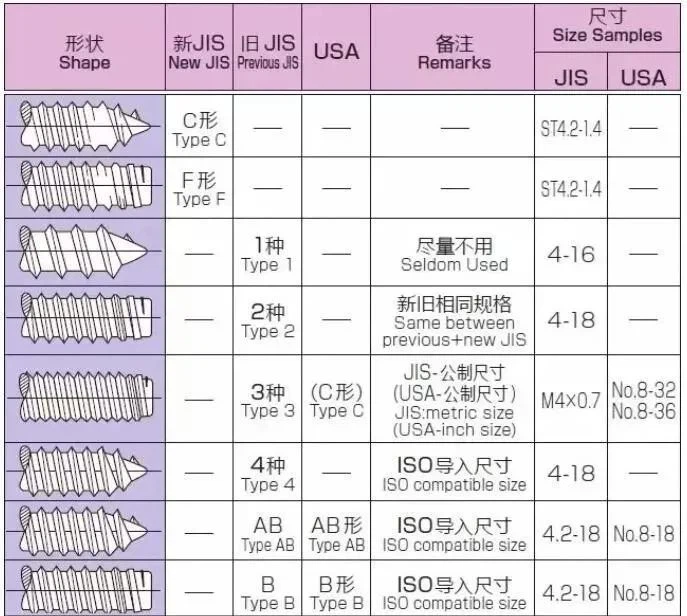
Types of self-tapping screws
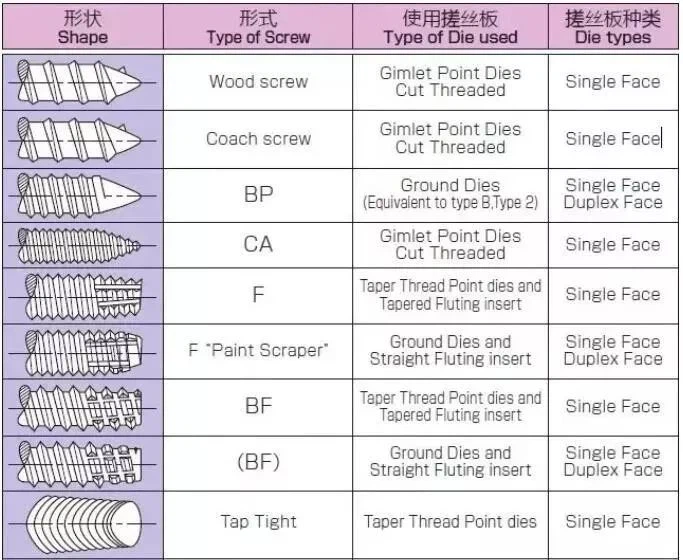
Types of special self-tapping screws and the use of thread rubbing boards
1. Self-tapping screws are screws with a drill bit. Hexagon socket bolts are constructed with special electric tools. Drilling, tapping, fixing, and locking are completed at one time. Self-tapping screws are mainly used for connecting and fixing some thinner plate parts, such as the connection between color steel plates and color steel plates, the connection between color steel plates and purlins, wall beams, etc. Their penetration capacity generally does not exceed 6mm, and the maximum does not exceed 12mm.
2. Self-tapping screws are often exposed outdoors and have strong corrosion resistance; their rubber sealing rings can ensure that the screws do not seep water and have good corrosion resistance.
3. Self-tapping screws are suitable for use on wooden materials, which are what we often call wood screws. It is generally operated manually. Due to manpower limitations, such screws are generally very small and have a narrow range of use.
4. Self-tapping screws combine taps and bolts. The front is the tap and the back is the thread. On generally softer materials, you can drill a hole and screw it in directly. The thread is tapped by the tap, and then the bolt thread is tightened. If the screw diameter is smaller, the material is also very soft. You can even screw it into wood without drilling holes first.
5. Self-tapping screws are usually described by three parameters: screw diameter series, number of threads per inch and screw length. There are two types of screw diameter grades: 10 and 12, whose corresponding screw diameters are 4.87mm and 5.43mm respectively; the number of threads per inch is available in three grades: 14, 16, and 24. The more threads per inch, the higher the screw diameter. The stronger the drilling ability.