
MYWAY Studs – Wide Range, Great Value. Your China Fastener Manufacturer.
11+ Years Expertise | Professional Fastener Manufacturer | Standard & Custom Parts | DIN, ISO, ANSI Certified | Strong R&D | Ample Stock | Cost-Effective |
Professional Team | Serving 40+ Countries | Reliable Logistics
Threaded Rods
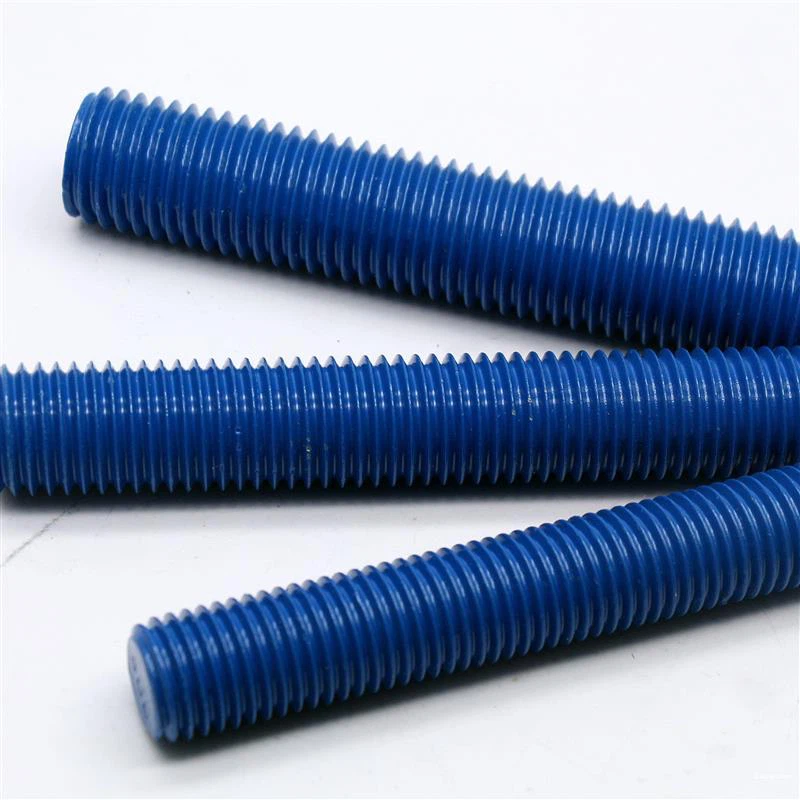
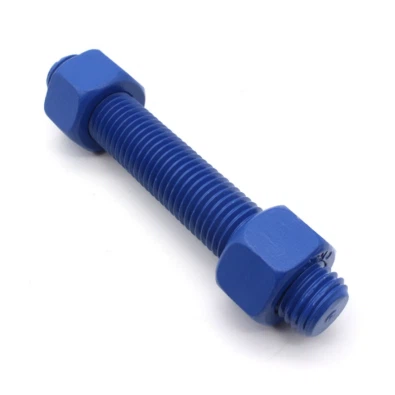
Threaded Rod/Thread Rod/Thread Bar DIN976 Teflon/PTFE
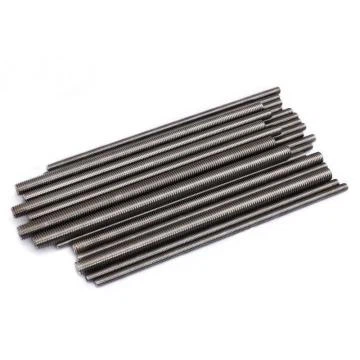
Threaded Rod/Thread Rod/Thread Bar DIN976 SS316/316 Stainless Steel
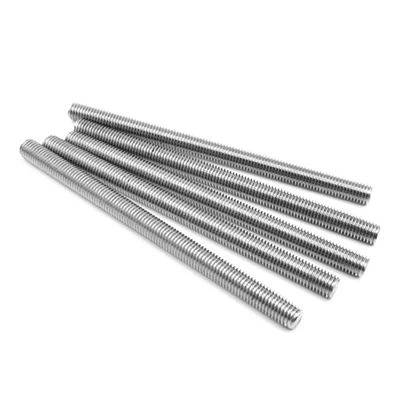
Threaded Rod/Thread Rod/Thread Bar DIN976 SS304/304 Stainless Steel
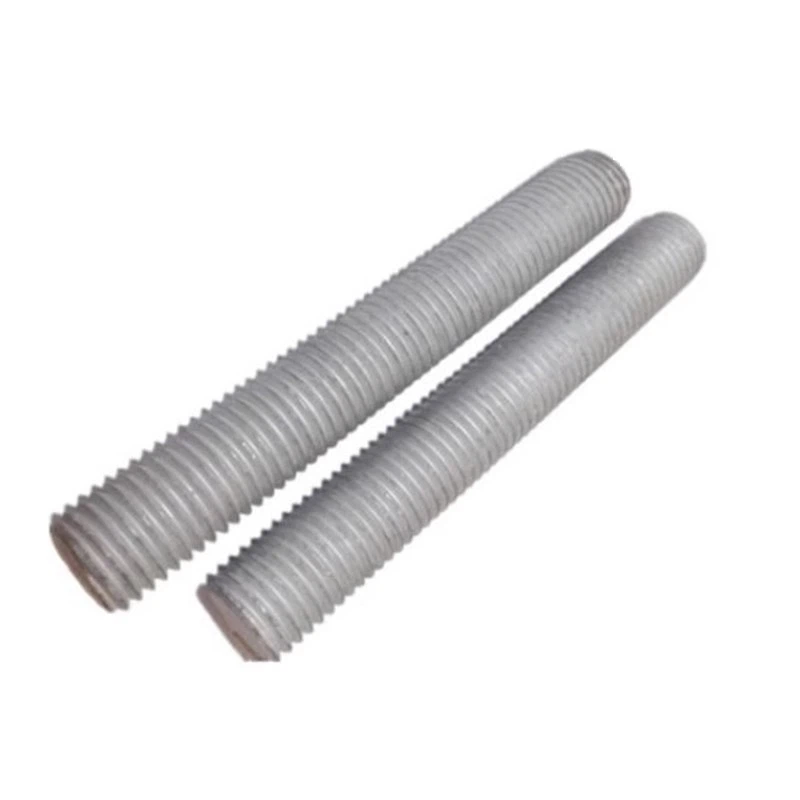
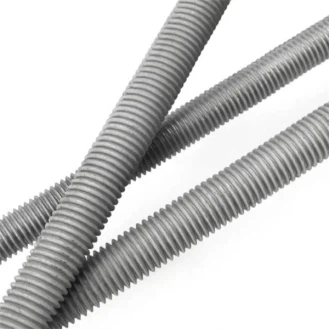
Threaded Rod/Thread Rod/Thread Bar DIN976 HDG/Hot Dip Galvanized
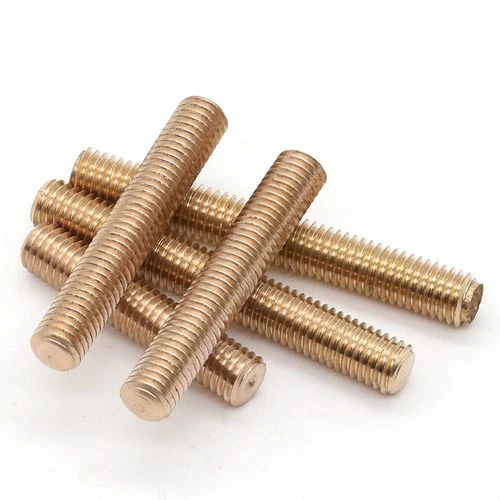
Threaded Rod/Thread Rod/Thread Bar DIN976 Brass
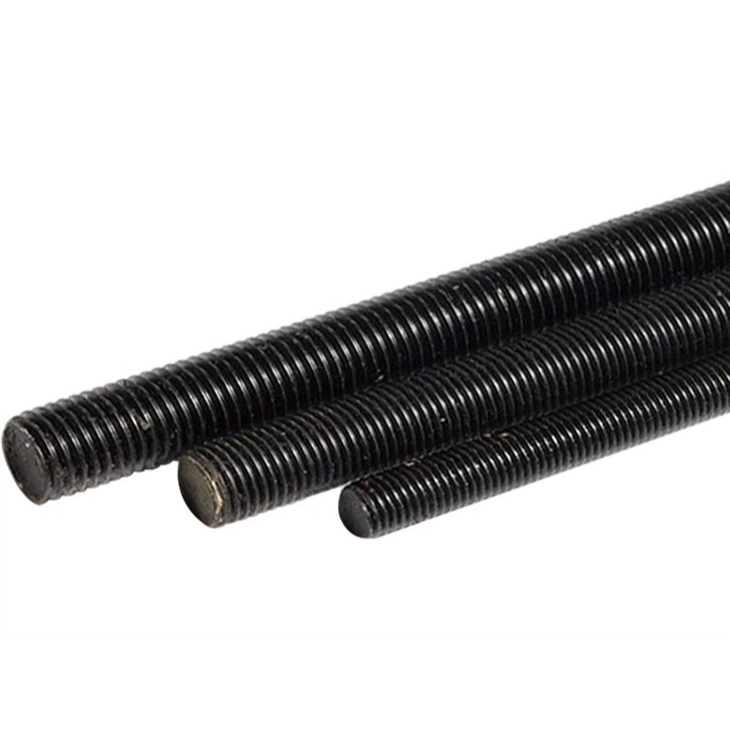
Threaded Rod/Thread Rod/Thread Bar DIN976 Black
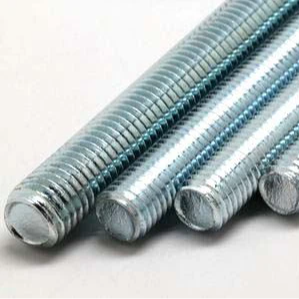
Threaded Rod/Thread Rod/Thread Bar DIN976 Bright Zinc/Zinc Plated/Clear Zinc/Blue White Zinc
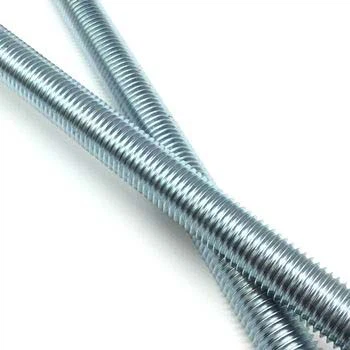
Threaded Rod/Thread Rod/Thread Bar DIN975 M10X3000 4.8 Bright Zinc/Zinc Plated/Clear Zinc/Blue White Zinc
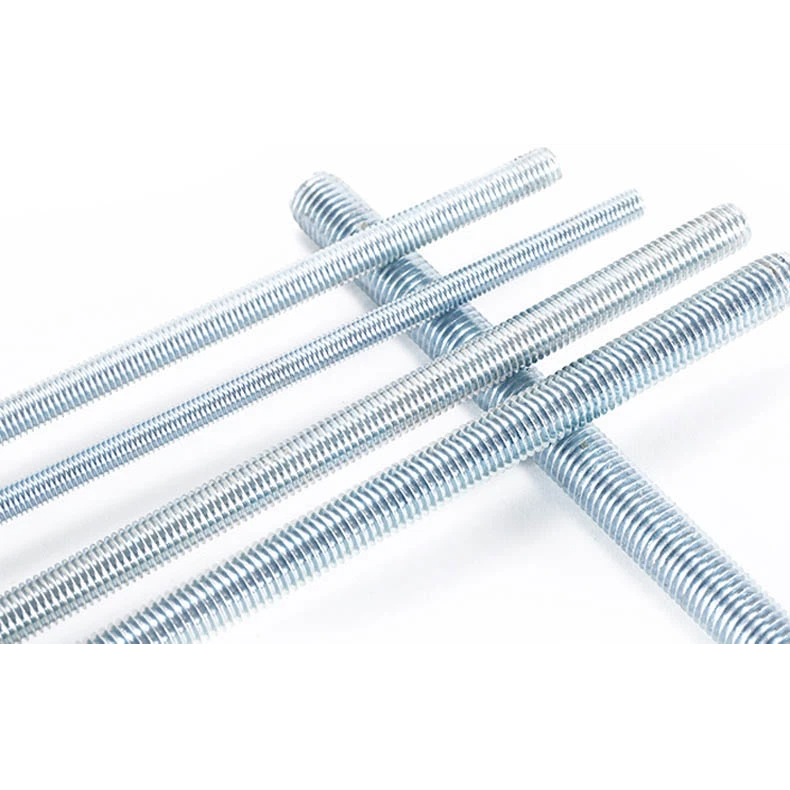
Threaded Rod/Thread Rod/Thread Bar DIN975 M10X180 4.8 Bright Zinc/Zinc Plated/Clear Zinc/Blue White Zinc
Threaded rods, also known as studs, are commonly used hardware components in mechanical and construction applications. These sturdy rods are popular for their versatility and can be found in almost every industry imaginable.
At their core, threaded rods are simply long, straight rods with external threads running along their entire length. They are often made from materials such as stainless steel, carbon steel, or aluminum. Threaded rods are typically used in applications where a bolt or screw would be impractical due to their length and the need for a secure fastening.
One of the most common uses for threaded rods is as an anchor for concrete or masonry. They are often threaded into a hole drilled into the foundation or wall, and topped with a nut and washer to provide stability. Threaded rods are also commonly used in the construction of stairs, railings, and other structures where a strong, secure attachment is needed.
In addition to construction applications, threaded rods are also used in mechanical applications such as those found in the automotive or machinery industries. They are frequently used as a component in assemblies, where they can be threaded into other components such as nuts, couplings, or bushings.
One unique benefit of threaded rods is their ability to be easily cut to a desired length. This makes them ideal for custom applications or unique situations where a standard length fastener would not suffice.
Overall, threaded rods are an essential component in many industries. With their strength, versatility, and ease of use, threaded rods offer an ideal solution for a wide variety of fastening applications.
What Is A Studs?
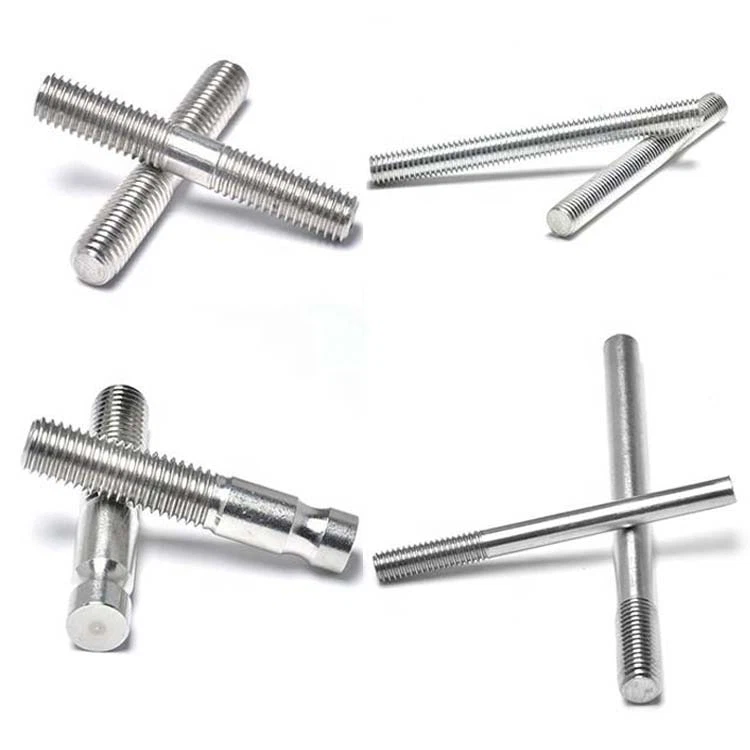
Studs are threaded fasteners. which consists of a threaded part and a cylindrical part. It can be connected to a nut that also has threads through the threaded part, and is used to connect two or more parts. A type of fastener with threads on both ends of the stud can be simply understood as the product obtained by tapping a metal cylinder. In practical applications, studs are cylindrical fasteners with threads at both ends or the entire length. One end is used to connect to a deep hole, and the other end is connected to a nut to achieve tightening.
There are various types of studs, including ordinary studs, high-strength studs, stainless steel studs, red copper studs and aluminum alloy studs, etc. Different types of studs vary in appearance features, but generally include a threaded portion, a cylindrical portion, and a head. The threaded part is one of the most important components of the stud. It is usually a trapezoidal thread that rotates periodically to achieve connection with the nut. The cylindrical part is the main part of the stud, usually in a cylindrical shape, and its diameter and length are designed according to the usage requirements. The head is usually an auxiliary part used to provide a tool with which the stud can be easily rotated, and its shape and size vary according to the purpose and type of tool.
Studs play an important role in mechanical equipment, construction engineering, automobile manufacturing and other fields, connecting different objects together through the friction and tension of threads. In addition, there are many uses and types of studs, such as flange studs, washer studs and expansion studs, etc., which are used for different connection needs and occasions.
Studs Production Process
Step 1: Raw material inspection & Cutting of raw material
The raw material is picked based on the application. Like all other stud bolt manufacturers in India, we also choose the material to be used and conduct a chemical and physical inspection of the round bar material. The round bar raw material is then selected as per the size, followed by cutting it for the required length. This process is followed in all bolt, nut, and stud manufacturing processes.
Step 2: Hot-forging process
The hot forging process is applied for bolt and nut manufacturing. During the forging, the bolt head/nut is deformed by induction heating. Then, calculations are made to determine the required length, recrystallize the metal’s temperature, and bend to the required shape and size.
Step 3: Annealing
In the next step, after forging, the material is annealed for uniformity and eased for machining. All three nut, bolt, and stud manufacturing include this process.
Step 4: Cleaning & Trimming
Surface finishing is the next step in the nut, bolt, and stud manufacturing process. Annealing and cleaning the nuts, bolts, and studs in a shot blasting machine makes the surface smooth and removes any scaling or burr. Next, the access material near the head is removed by trimming/drawing. This process is applicable only for nuts and bolts.
Step 5: Turning Process
The next step of bolt nut manufacturing is the turning process. First, the material is machined to the required dimensions, usually done by a CNC machine. This process is done to remove excess material and maintain a pitch diameter.
Step 6: Thread Rolling
This is a mechanical process where threads are cold-formed and is done with two dies. One is stationary, and the other is a moving die that actually exerts pressure on the bolts and studs. Tapping is done for nut manufacturing in India.
Step 7: Heat Treatment
Heat treatment is done to make the bolts, nuts, and studs stronger. This process involves hardening materials in a gas carburizing furnace at a temperature of 850-900°C and then quenched in the cooling media. All the process is recorded in data loggers.
Step 8: Phosphating
Phosphating is a chemical process of treating the surface. Operations are performed to alter the surface of the bolt, nut, or stud. Soluble metal-phosphate layers are formed on the job, enhancing the function and aesthetic appeal of the product.
Step 9: Re-threading
This simple process of nut bolt manufacturing after the completion of all the procedures.
Step 10: Packaging & Dispatch
After completing all the above steps, the products are sent for testing and inspection. First, they are thoroughly checked for their hardness levels, threading accuracy, strength, etc.; once they pass all these procedures, protective sleeves are inserted while packing to prevent damage to the thread and the packaging.
As a professional fastener manufacturer in China, MYWAY Metal Fasteners strictly follow these steps to deliver quality products to customers at competitive rates.
Type Of Studs
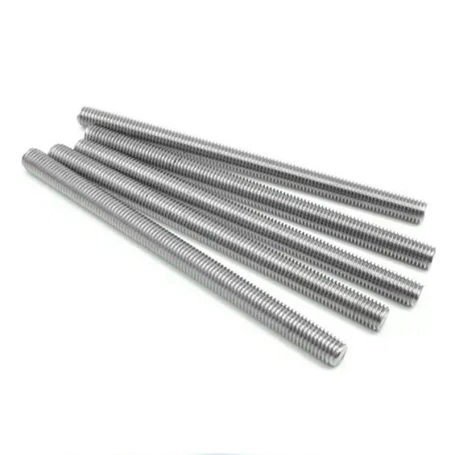
Fully Threaded Stud
This is the most common, recognizable type of stud. It’s essentially just a length of threaded bar/threaded rod, which is frequently paired with nuts at each end.
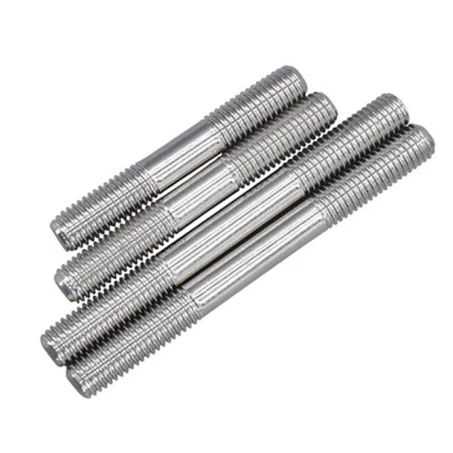
Double-End Stud
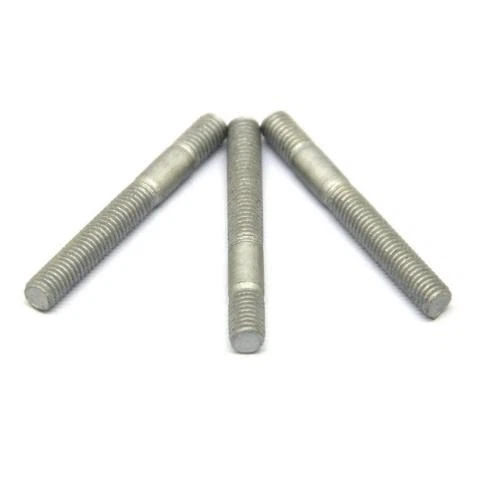
This type of stud has threading at each end and an unthreaded body in the middle. In some cases, the ends have similar threads and diameters; in other cases, they’re different. Either way, both ends are usually intended to accept nuts.
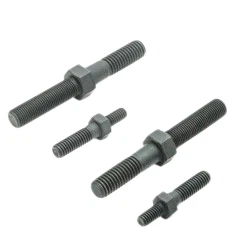
Hex Stud
This type of stud is threaded at both ends, but has a hex or collar in the middle.
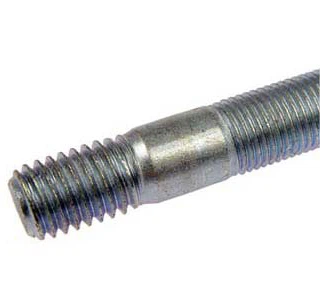
Tap End Stud
This type of stud has a short length of thread at one end that’s intended to screw into a tapped hole. Then, after an unthreaded shank in the middle, the other end has a long length of thread that is usually paired with a nut.
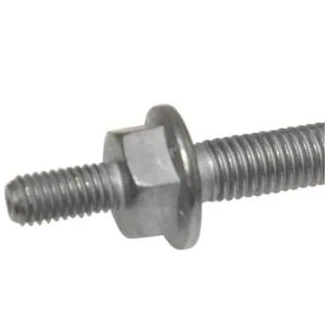
Flange Stud
This type of stud has a continuous threaded body and chamfered ends. It’s intended to accept two nuts at opposite ends, which are tightened to secure pipe flanges.
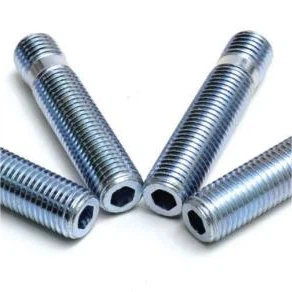
Wheel Stud
This type of stud usually has threading at one end, a body, a knurled section, and a head. The knurl is designed to be pressed into and grip the wheel hub, securing the vehicle wheel in place
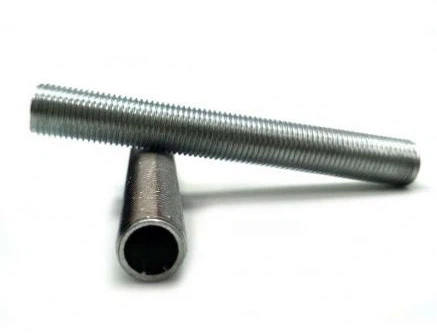
Hollow stud
Hollow studs are an essential component for any construction project. Made from high-quality materials, these studs provide a solid foundation for walls, ceilings, and other applications. Their hollow design and lightweight construction make them easy to install, saving time and labor costs. They are compatible with a wide variety of fasteners, ensuring secure and reliable connections. Additionally, hollow studs provide excellent sound and thermal insulation, improving the overall quality of a building.
What Materials Are Studs Made Of?
Studs can be anodized, coated with phosphate or black oxide, chrome galvanized, or plated with gold, nickel, silver, tin, zinc, or zinc chromate.
Metallic:
●Aluminum is malleable, ductile, light, and trivalent with good electrical and thermal conductivity, high reflectivity, and resistance to oxidation.
●Brass has good strength, excellent high temperature ductility and reasonable cold ductility, good conductivity, excellent corrosion resistance, good bearing properties and low magnetic permeability.
●Bronze is a metal composed of copper as the main alloying metal and one or more other metals, such as tin, zinc, or phosphorus.
●Silicon bronze is a typical stud alloy.
●Copper is a reddish metallic element that is ductile and malleable and is one of the best conductors of heat and electricity. Copper also exhibits good corrosion resistance.
●Titanium is hard, light, strong and corrosion-resistant. Titanium studs are used widely in the aerospace industry and in medical applications, such as replacement joints.
●Steel studs are made from iron that contains carbon in any amount up to about 1.7 percent as an essential alloying constituent. Many grades of carbon and alloy steel are used as fastener materials. Some grades must be coating to protect studs against corrosion. Others, such as stainless steel studs, are chemical and corrosion resistant, and can have relatively high stress ratings.
●Many different grades of stainless steel are used in fasteners such studs; however, stainless steels cannot be hardened to the same degree as carbon steels. Consequently, hardened steel is another common material choice for metal studs.
●Specialized and proprietary materials for metal studs include Inconel® and Incoloy®, alloys which combine good strength and excellent resistance to oxidation and carbonization in high temperatures and many aqueous environments. Inconel and Incoloy, registered trademarks of Special Metals Corporation, are generally used at service temperatures below 650°C (1200°F).
●Monel® is an alloy with high strength and resistance to a range of corrosive media including seawater, hydrofluoric and sulfuric acids, and alkalis. Monel is also registered trademark of Special Metals Corporation.
Non-metallic:
●Plastic
●Fiber-reinforced plastic
●Nylon
●Polyvinyl chloride (PVC)
●Polyvinylidene fluoride (PVDF)
●Polytetrafluoroethylene (PTFE)
●Synthetic rubber
What Are The Surface Treatments Of Studs?
Zinc Plated
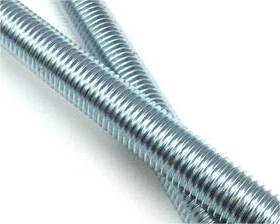
Zinc plated studs are high-quality fasteners that are essential in a wide range of applications. They are coated with zinc to provide extra protection against corrosion and ensure long-lasting durability. Zinc plated studs are popular in construction, automotive, and machinery industries due to their strength and reliability. Available in a variety of sizes and shapes, they offer excellent resistance to harsh environmental conditions, wear, and tear. These studs are easy to install and provide a secure hold without the risk of loosening. Get the strength and performance you need with our high-quality zinc plated studs.
Colour Zinc
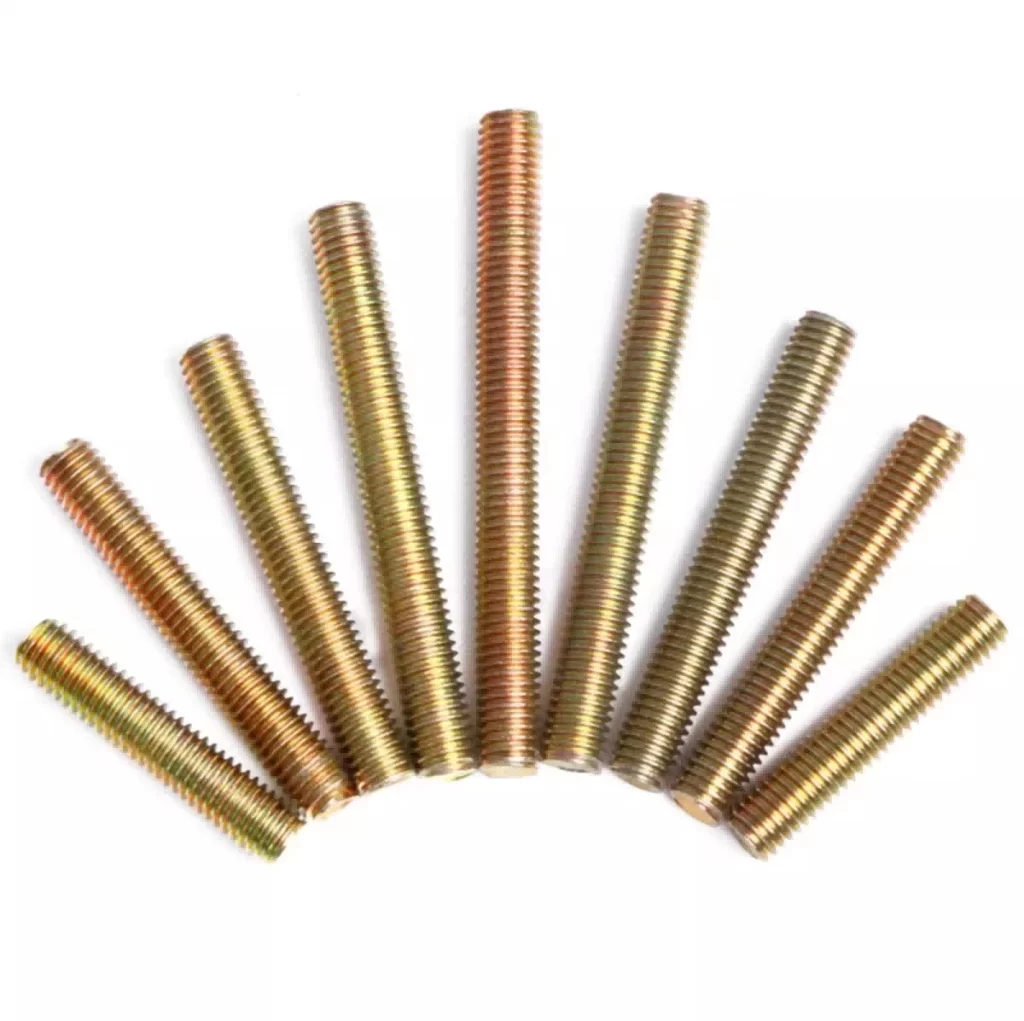
At the heart of the yellow zinc coating is the electroplating process used during manufacturing. This involves the use of an electric current to deposit a thin layer of zinc onto the threaded rod surface. The result is a bright, yellow finish that is highly resistant to rust and corrosion.Apart from being highly functional, threaded rod yellow zinc is also aesthetically pleasing, making it an ideal choice for applications where appearances matter. From construction and engineering to automotive and industrial applications, there are many different settings in which this type of threaded rod can be used.
Black Oxide
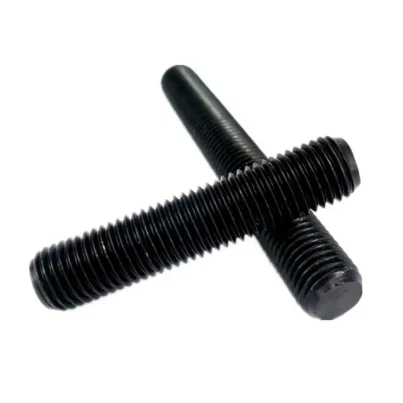
Our Black Oxide studs are a superior fastening solution that will provide you with long-lasting durability and exceptional resistance to corrosion. Made from high-quality materials, these studs have undergone a black oxide treatment that not only enhances their appearance but also provides a layer of protection against wear and tear. Whether you’re in need of fastening parts in automotive, construction, or industrial applications, our Black Oxide studs will get the job done with precision and reliability. Trust in our proven track record of excellence in manufacturing and order your Black Oxide studs today.
Hot Dip Galvanized
Our Hot Dip Galvanized studs are the perfect solution for any project that requires a durable and reliable fastening solution. These studs are crafted from high-quality materials and are coated with a layer of hot dip galvanization to ensure maximum rust and corrosion resistance. This makes them ideal for use in harsh environments such as marine environments or outdoor construction projects. Our studs are available in a variety of sizes to suit any need and come with a range of accessories to ensure the perfect fit for your project. Choose our Hot Dip Galvanized studs for unparalleled quality and performance.
Teflon/PTFE
PTFE studs are a type of high-performance fastener designed to provide exceptional corrosion and chemical resistance in demanding environments. Made from virgin PTFE, they are incredibly strong and durable, with a smooth surface that prevents galling or seizing during installation or removal. PTFE studs are available in a range of sizes and configurations to suit different applications, and are ideal for use in industries such as aerospace, automotive, oil & gas, and chemical processing. They are also commonly used in applications where high temperatures or pressures are present, as well as in applications where low friction and high wear resistance are required.
Dacromet
Dacromet studs are high-quality fasteners that have a special coating designed to provide superior corrosion resistance and durability. Made from premium-grade materials, these studs are perfect for use in harsh environments where other fasteners may fail due to rust or erosion. Dacromet studs are available in a variety of sizes and thread types to meet the needs of any project or application. Our rigorous quality control processes ensure that these studs meet or exceed industry standards for performance and reliability. With Dacromet studs, you can trust that your fastening needs will be met with the highest level of quality and durability.
Precautions For Use And Maintenance Of Studs
Studs are most commonly used for joining two components with internally threaded holes, like nuts, together.Widely used in electric power, chemical industry, oil refining, valves, railways, bridges, steel structures, automobile and motorcycle parts, machinery, boiler steel structures, hanging towers, long-span steel structures and large buildings, etc.
Stud fasteners are often used to:
1.Wheel hub assemblies.
2.Fasten flanges and gaskets.
3.Prevent fluids from leaking through holes in machines.
4.Assemble heavy-duty materials like turbines and tanks.
Daily maintenance of studs:
1. Prevent contact between studs and corrosive substances, such as acids, alkalis, etc.
2. Clean the studs regularly to remove dust and dirt on the surface.
3. When using studs, long-term tightening should be avoided to avoid deformation and cracking of the studs.
4. When storing studs, they should be placed in a dry and ventilated place to prevent moisture corrosion.
5. Once the studs are found to be rusted, rust remover must be applied promptly.
6. When installing studs, choose specifications and models that match the original studs to ensure stable connection performance.
About Screws Packaging And Transportation
1. Packaging Materials
Choose materials with good moisture-proof, shock-proof, anti-corrosion and sealing properties, generally choose cartons, wooden boxes, plastic packaging and other materials.
2. Packaging Specifications
In compliance with relevant national standards and regulations, packaging specifications should be reasonably designed based on the size, weight, material, quantity, etc. of the product to avoid collisions and extrusions during transportation.
3. Packaging Form
There are two forms of single product packaging and batch packaging. Single product packaging is generally suitable for small batches of products, and batch packaging is suitable for large quantities of products.
4. Logo
Mark the product name, quantity, specifications, moisture-proof grade, shelf life and other information on the packaging.
5.Save
Avoid contact with toxic and flammable substances. The storage environment should be kept dry, ventilated, and clean. The storage location should be set up reasonably to avoid damage and contamination.
6. Transportation Method
It can be carried out through various modes of transportation such as road, railway, aviation, and sea transportation, among which road and sea transportation are the most common. We are close to Shanghai Port and Ningbo Port, most customers choose Shanghai Port. We pursue smooth transportation, avoid bumps and collisions, and do our best to ensure that products are delivered to customers in good condition and on time.
7. Temperature and Humidity Adjustment
Try to maintain a suitable temperature and humidity environment to avoid being affected by excessively high or low temperature and humidity, which may affect the quality and life of the product.
8. Safety Guarantee
Take necessary safety protection measures during transportation to avoid dangerous situations such as fires, explosions, accidents, etc., and ensure that they are not damaged or lost during transportation.
9. Insurance Requirements
In order to ensure transportation safety and improve transportation insurance coverage, you can purchase cargo transportation insurance when purchasing our high-value fastener products to avoid accidental loss or damage.
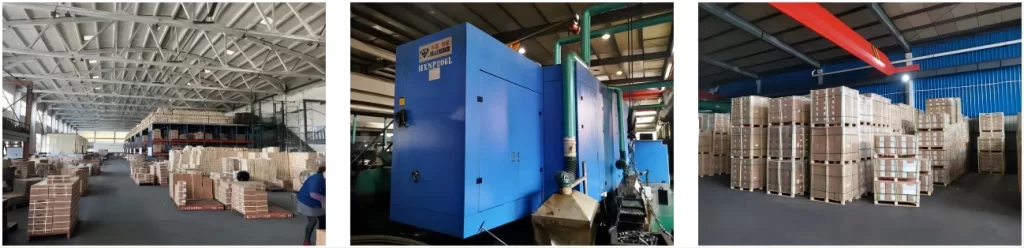
Our Washer Factory

MYWAY Services
MYWAY strictly complies with the requirements of the ISO9001 quality certification system, strictly controls quality, implements it at every level, and assigns responsibilities to everyone to ensure the healthy operation of the comprehensive system of design, production, sales, and after-sales service. In order to strengthen communication with users, better provide users with high-quality products, and better serve users with the brand, we have made the following commitments:
1. Products are designed and manufactured in strict accordance with standards. We produce non-standard products according to the drawings provided by customers.
2. Pre-sales service
Serving customers: product introduction, answers to technical questions, and engineering-assisted design.
3. Sales service
1). The products are based on the needs of user orders, with quality and delivery time as the premise.
2). During the use of the product, our company regularly organizes technical and quality inspection service personnel to visit and solicit feedback from users on the quality, usage status, improvement opinions and other aspects of the product, so as to further improve product quality.
4. After-sales service
1). If users have any problems or information when using our products, please report them back to the company in a timely manner so that the company can properly handle and improve them so that our products can better meet your requirements.
2). If the product does not work properly or is damaged due to quality problems during the warranty period, our company will be responsible for free repair or replacement. If the product is damaged or does not work properly due to improper use by the user, our company can provide repair services. If users need it, our company can provide users with free pre-sales and after-sales technical consultation.
.After-sales service. Users are required to fill in the product service and quality feedback information form and make appraisal opinions in order to improve the quality of MYWAY products and services.
FAQ
Q: What is the difference between all thread and studs?
A: The basic difference is that while all thread rod has their length measured from “end-to-end”, studs are measured from “first-to-first”.
Q: Do all studs have screws?
A: Studs contain nails or screws. Before there were electronic stud finders, do-it-yourselfers used magnetic stud finders which locate the nails and screws. Look for an electrical outlet. It’s probably fastened to the side of a stud.
Q: How do you know stud bolt size?
A: To find the stud size just measure the diameter of the shank. The shank is the shaft-like part of the bolt or stud. Preferably use calipers to obtain an accurate measure of the shank’s diameter, but a ruler works too. In most automotive instances, the shank’s diameter is going to be either 1/4, 5/16, or 3/8.
Q: What is a stud nut?
A: Studs & Nuts: A bolt with threads on both ends designed to be screwed permanently into a fixed part at one end and to receive a nut on the other.
Q: What is the standard stud bolt?
A: ASTM A193 stud bolts are available in national coarse (UNC) thread pitches, generally used in traditional applications, which means that there are 8 threads per inch (“thread per inch”) for rod diameters above 1 inch. B7 is the most common specification grade for stud bolts.
Q: Where are stud bolts used?
A: Studs are threaded at both ends and the middle screw, either thick or thin.It is generally used in mining machinery, Bridges, automobiles, motorcycles, boiler steel structure, pylon, long-span steel structure and large buildings.
Q: Why use a stud instead of a bolt?
A: Another advantage of using studs is that you don’t need to worry about insufficient clamping load because a too-long bolt bottomed out in its hole. The stud is stationary, and clamping load is achieved by tightening the nut.
Q: What is the difference between a stud bolt and a screw?
A: Stud bolts are used to connect two components together, with one end of the bolt threaded into one component and the other end threaded into the second component, while screws are used to fasten an object to a surface or to attach two components together with a nut or other threaded fastener.
Q: What screw to use for stud?
A: Short self drilling screws are ideal for metal stud to stud connections for metal stud framing. The most common type being a #10 x 3/4″ Modified Truss Head Self Drilling Screw or a 10 X 5/8″ Pancake Framer. They can be used interchangeably.
Q: What is the difference between a stud bolt and a hex bolt?
A: In Petrochemical industry stud bolts and hex machine bolts are used for connections. The Stud Bolt is a thread on full-lengths or at both ends, while Hex Machine Bolt has a hexagonal head with one nut. Both the nuts and head are six-sided.
Q: Can you screw into a stud?
A: If you’re using a screw, insert it into the hole clockwise until it’s securely fastened in the stud. For screw anchors, gently tap them into the hole with a hammer until they are flush with the wall. Once the screw or anchor is in place, gently tug on it to ensure it is securely fastened to the stud.
Q: How are studs measured?
A: There are two common industry measurements for studs, ‘end-to-end’ and ‘first-to-first. ‘ An ‘end-to-end’ measurement literally measures the overall length of the stud. Conversely, a ‘first-to-first’ measurement excludes the ends of a stud beyond its threaded area.
Q: What is a stud in construction?
A: You can cut the nails with a reciprocating saw first along the top and bottom plates or just use a hammer (or sledge hammer) to knock the studs outwards until the bottom is released. You can then pull out the upper end of the stud and remove it.
Q: What is a stud in construction?
A: Studs are a series of vertical load-bearing members used to support elements in walls and partitions. Studs in exterior walls of one- and two-story buildings are at least a nominal 2×4 inches with the 4-inch dimension formng the basic wall thickness.
Q: How to cut a hole in a stud?
A: Any stud may be bored or drilled, provided that the diameter of the resulting hole is no more than 60 percent of the stud width, the edge of the hole is no more than 5/8 inch (16 mm) to the edge of the stud, and the hole is not located in the same section as a cut or notch.
Q: Is stud a permanent fastener?
A: Temporary. Temporary fasteners are designed specifically to join two materials or objects, with the option to be removed and reused without damaging the objects they hold together. Common examples include bolts, screws, nuts, washers and studs.
We’re professional bolt manufacturers and suppliers in China, specialized in providing high quality customized products with low price. We warmly welcome you to wholesale or buy discount bolt in stock here from our factory. Contact us for free sample.